

Zirconia fiber is a high-performance ceramic fiber mainly made of zirconium oxide (ZrO2). It has excellent high temperature resistance, corrosion resistance and mechanical properties. It is widely used in high temperature insulation, composite materials and filtration.
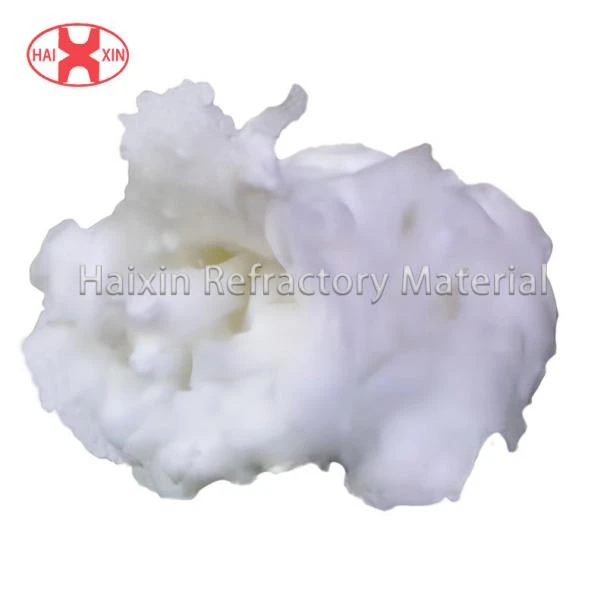
Unique properties of zirconia fibers
High temperature resistance: The melting point of zirconia fiber is as high as 2700℃, and it can remain stable in extreme environments above 2000℃, far exceeding traditional fiber materials.
Low thermal conductivity: Its low thermal conductivity makes it an excellent high-temperature thermal insulation material, suitable for high-temperature furnace linings, spacecraft thermal protection and other fields.
Corrosion resistance: Zirconia fiber has strong corrosion resistance to acids, alkalis and molten metals and can be used for a long time in harsh chemical environments.
High strength and toughness: By doping with stabilizers (such as yttrium oxide), zirconia fibers can achieve phase transformation toughening, significantly improving their mechanical properties.
Application of zirconia fiber in composite materials
Zirconia fiber, as a reinforcing material, can significantly improve the performance of composite materials:
High-temperature composite materials: In the aerospace field, ceramic matrix composites (CMC) reinforced with zirconia fibers are used to manufacture high-temperature components such as engine blades and combustion chambers, greatly improving the heat resistance and efficiency of the engine.
Insulating composite materials: Zirconia fibers combined with ceramic matrix can be made into high-performance thermal insulation materials, which are used in spacecraft thermal protection systems and blast furnace linings to effectively reduce heat loss.
Functional composite materials: Zirconia fibers can also be used as catalyst carriers or filter materials for high-temperature gas filtration and chemical reactors to improve the stability and efficiency of the system.
Key to the development of high-performance composite materials
The addition of zirconia fiber has brought the following breakthroughs to high-performance composite materials:
Performance improvement: The high strength, high temperature resistance and corrosion resistance of zirconia fiber enable composite materials to remain stable in extreme environments and extend their service life.
Lightweight design: Compared with traditional metal materials, zirconia fiber-reinforced composite materials have lower density, which helps to achieve lightweight design of equipment.
Multifunctionality: By compounding with other materials, zirconia fiber can give composite materials multifunctional properties such as thermal insulation, catalysis, and filtration to meet the needs of complex application scenarios.
With the continuous advancement of nanotechnology, doping modification and composite technology, the performance of zirconia fiber will be further improved, and its application range in high-performance composite materials will continue to expand. In the future, zirconia fiber is expected to play a greater role in new energy, environmental protection, biomedicine and other fields, and become an important engine to promote the development of materials science.
In short, zirconia fiber, with its excellent performance and wide application potential, is becoming a key material for the development of high-performance composite materials, providing strong support for modern science and technology and industrial progress.