

Characteristics and application of lightweight clay castables
Lightweight clay refractory castable is a kind of amorphous refractory material with lightweight aggregate (such as expanded perlite, ceramsite, floating beads, etc.) as the main component, combined with refractory clay, binder (such as aluminate cement, phosphate, etc.) and additives. It has low density, low thermal conductivity and good thermal insulation performance, and has a certain degree of refractoriness and mechanical strength. It is widely used in the insulation layer of high-temperature industrial equipment or parts with low load-bearing requirements.
Lightweight clay refractory castables have become the preferred material for thermal insulation layers of high-temperature industrial equipment through their three core advantages of lightweight, thermal insulation, and ease of construction. They are especially suitable for weight-sensitive, fast-construction, or energy-saving scenarios. If further performance optimization (such as improving strength or corrosion resistance) is required, customization can be achieved by adjusting the aggregate type (such as adding hollow alumina balls) or binders (such as phosphates).
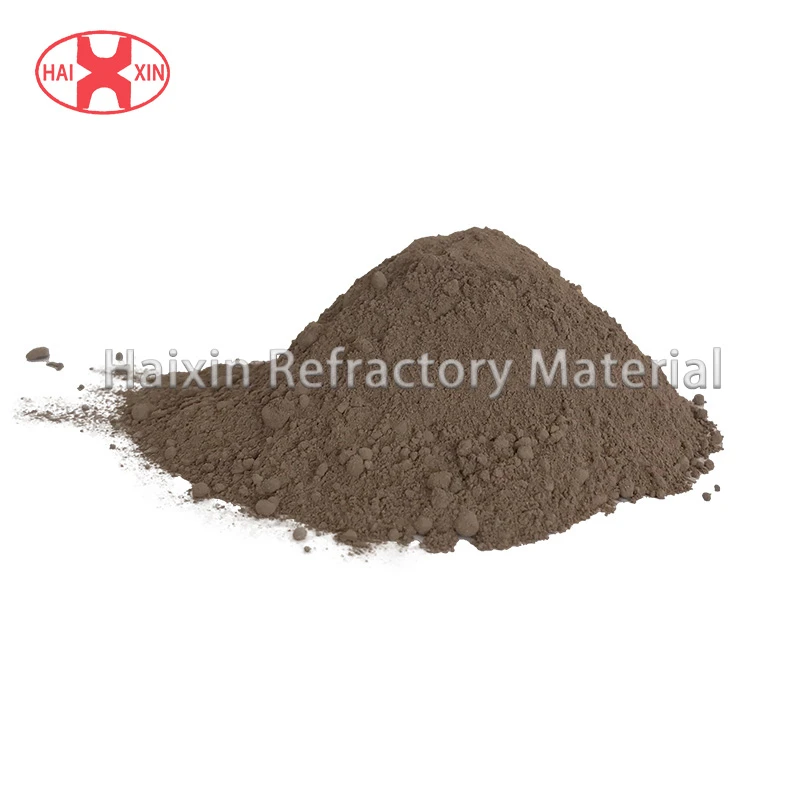
The advantages of lightweight clay refractory castables are mainly reflected in its lightweight design, excellent thermal insulation performance and construction flexibility. The following is a detailed description of its core advantages:
1. Lightweight and low density, reducing structural load
Low volume density: usually 0.8~1.5 g/cm³ (the density of traditional refractory castables can reach 2.5~3.0 g/cm³), significantly reducing the overall weight of the equipment or furnace lining.
Applicable scenarios:
High-altitude structures (such as the top of the kiln) or parts with strict load-bearing requirements (such as mobile heating equipment).
Reduce the cost of supporting structures and extend the service life of equipment.
2. Excellent thermal insulation performance, energy saving and consumption reduction
Low thermal conductivity: only 0.1~0.5 W/(m·K) (the thermal conductivity of ordinary refractory materials is 1.0~2.0 W/(m·K)), which can effectively reduce heat loss.
Energy saving effect:
The temperature of the outer wall of industrial furnaces is reduced by 30%~50%, reducing fuel consumption.
Applicable to high-temperature pipes, boilers and other occasions where surface temperature needs to be controlled.
3. Stable high temperature resistance
High refractoriness: up to 1200~1600℃ (depending on the grade of aggregate and binder), meeting the needs of most medium and high temperature industrial scenarios.
Good thermal shock stability: lightweight structure relieves thermal stress and reduces the risk of cracks caused by sudden temperature changes.
4. Flexble construction, adaptable to complex structures
Casting molding: can be cast into any shape on site, suitable for special-shaped parts (such as pipe elbows, vaults).
No need for sintering: directly baked and used after curing at room temperature, shortening the construction period (traditional refractory bricks need to be prefabricated and masonry).
Easy to repair: local damage can be quickly repaired to reduce maintenance costs.
Energy-saving benefits: reduce heat loss, and long-term use can reduce energy costs.
Environmental characteristics: low carbon emissions during the production process, some aggregates (such as floating beads) are industrial by-products, and resource utilization is high.