

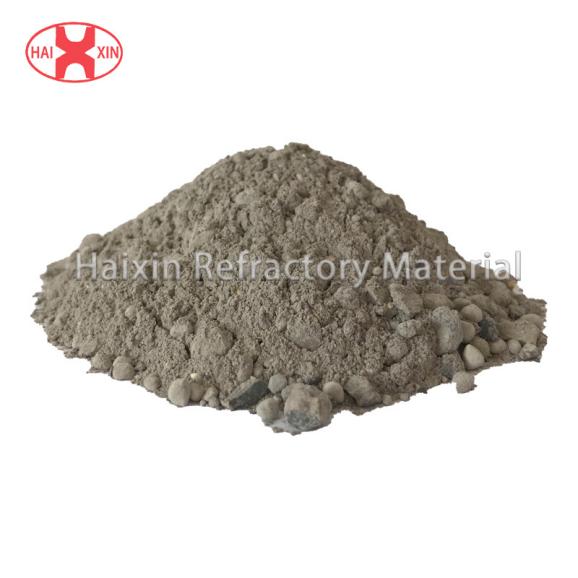
Refractory castable is a granular and powdered material made of refractory materials, with a certain amount of binder and water added. It has high fluidity and is suitable for unshaped refractory materials formed by casting.
Classification of refractory castables
Refractory castables are mainly classified by material or binder. There are also classifications based on material properties, such as thermal insulation refractory castables, acid and alkali resistant castables, steel fiber reinforced castables, etc. Let's take a look at the classification of refractory castables by binder:
Hydraulic binder
Cement-bonded castables: Aluminate cement (such as CA-50, CA-70) or high-alumina cement is used as a binder. It hardens quickly and has high strength. It is suitable for medium and low temperature environments (such as boiler linings and flues).
Low-cement/ultra-low-cement castables (LCC/ULCC): Low cement content (<8%), excellent high-temperature performance, strong resistance to slag erosion, and is used in high-temperature areas such as blast furnaces and ladles.
Chemical binders
Phosphate bonded castable: phosphoric acid or aluminum phosphate solution is used as a binder, high temperature resistance (above 1600°C), good thermal shock resistance, used in rotary kilns and heating furnaces.
Sodium silicate (water glass) bonded castable: acid corrosion resistant, but easy to soften at high temperatures, mostly used in acid-resistant environments or low-temperature kilns.
Coagulation binder
Clay-bonded castable: It is bonded with micropowder (such as SiO₂, Al₂O₃ micropowder) through physical adsorption, requires high-temperature sintering, and is used in hot air furnaces and heating furnaces.
Sol binder
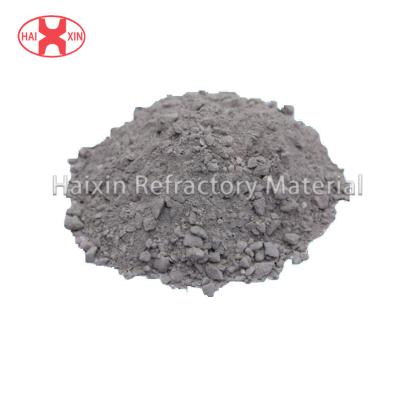
Silica sol/alumina sol castables: Nano sol improves the material density, has strong resistance to thermal shock and corrosion, and is suitable for harsh environments (such as ladles, RH furnaces).
Organic binder
Resin/asphalt bonded castable: hardens at low temperature and forms carbon bond after high temperature carbonization. It is used in blast furnace tapping channels and aluminum electrolytic cells (need to be isolated from oxidizing atmosphere).
In short, castables have excellent high temperature performance, corrosion resistance and mechanical properties, and are widely used in the manufacture and maintenance of equipment in various high temperature environments.
The various refractory castables produced by our company are sold well all over the country and exported to more than 20 countries and regions overseas. We cooperate with many scientific research institutions and have always been at the forefront of refractory material innovation and research and development.