

Refractory materials are indispensable key materials in industrial production and high temperature environments. They can maintain stable physical and chemical properties under extremely high temperature conditions to ensure the safe operation of equipment. So, what are the common refractory materials?
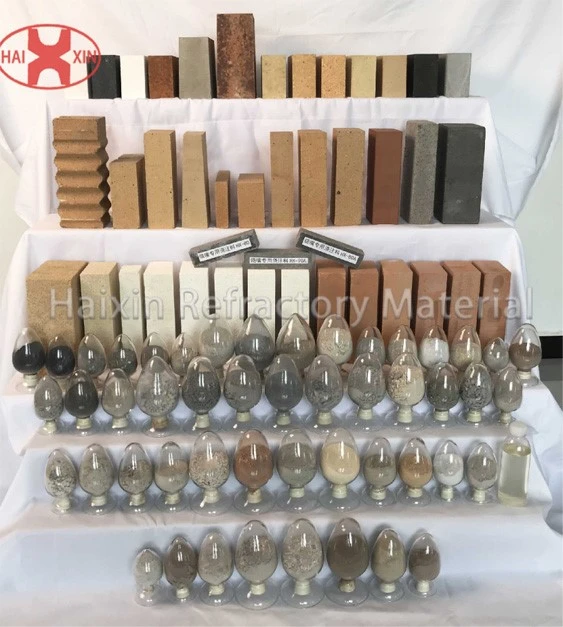
Refractory materials are generally used in metallurgy, glass, cement, ceramics, mechanical heat processing, petrochemical, power and national defense industries.
Ordinary refractory materials: silica brick, semi-silica brick, clay brick, high alumina brick, magnesia brick, etc.
Special refractories: AZS bricks, corundum bricks, directly bonded magnesia-chrome bricks, silicon carbide bricks, silicon nitride bonded silicon carbide bricks, non-oxide refractories such as nitrides, silicides, sulfides, borides, carbides, etc.; refractories such as calcium oxide, chromium oxide, aluminum oxide, magnesium oxide, and beryllium oxide.
Thermal insulation refractory materials: diatomaceous earth products, asbestos products, insulation boards, etc.
Unshaped refractory materials: furnace repair materials, refractory ramming materials, refractory castables, refractory plastics, refractory mud, refractory gunning materials, refractory projection materials, refractory coatings, lightweight refractory castables, taphole mud, etc.
As the cornerstone of high-temperature industry, the performance of refractory materials is directly related to the service life and production efficiency of equipment. Whether it is silica bricks, high-alumina bricks, magnesia bricks or silicon carbide bricks, they have demonstrated excellent high temperature resistance, corrosion resistance and thermal shock resistance in their respective application fields. With the continuous advancement of technology, the types and performance of refractory materials are also constantly optimized, providing more reliable guarantees for industrial production. In the future, refractory materials will continue to play an irreplaceable role in the high-temperature field and promote the further development of industrial technology.