

As a new generation of high-performance refractory materials, lightweight mullite bricks are reshaping the insulation design concept of high-temperature industrial equipment with their unique structural and performance advantages.
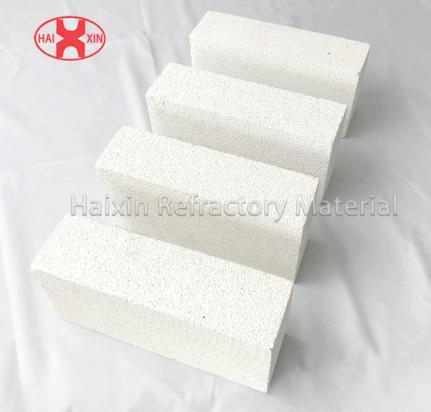
It is a lightweight refractory material with mullite (3Al₂O₃·2SiO₂) as the main crystal phase. It uses high-purity bauxite and silica as raw materials. It is sintered at high temperature by adding pore-forming agents to form a unique closed pore structure, which has both refractory and heat-insulating functions.
Performance characteristics of lightweight mullite bricks
1.High temperature resistance, can directly contact with flame: Its main component is mullite, which has a melting point of up to 1850℃ and has extremely high high temperature resistance. Under high temperature conditions, it can maintain a stable structure and is not easy to deform or melt.
2.Chemical erosion resistance: It contains a large amount of mullite, which has good acid and alkali erosion resistance. In various acidic and alkaline environments, it can maintain high chemical stability and extend its service life.
3.Thermal shock stability: It has high thermal shock stability and can maintain stable performance in an environment with rapid temperature changes. In the process of high temperature and rapid cooling, it is not easy to produce cracks and peeling, ensuring the safe operation of the equipment.
4.Good thermal insulation performance: It has a low density and good thermal insulation performance. In high-temperature equipment, lightweight mullite insulation bricks can effectively reduce heat loss and reduce energy consumption.
5.Lightweight and high strength: The special production process makes it light and high-strength. While ensuring the thermal insulation performance, it also has high strength and can meet the needs of various high-temperature equipment.
6.Low thermal conductivity: High porosity (usually 50%-70%) significantly reduces heat conduction, with a thermal conductivity of 0.2-0.5 W/(m·K) (normal to high temperature range), suitable for energy-saving kiln design. Closed pores are formed by adding pore-forming agents (such as polystyrene balls) or foaming process to reduce heat convection and radiation heat transfer.
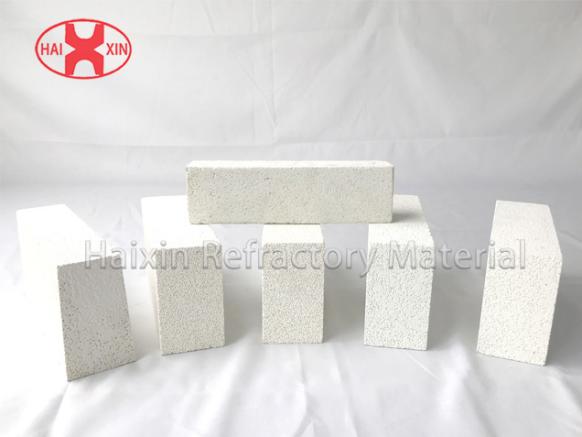
In industrial applications, lightweight mullite bricks are mainly used as thermal insulation linings for high-temperature equipment. In the metallurgical industry, they are used as permanent layers for ladles and heating furnaces; in the petrochemical field, they are used as thermal insulation layers for cracking furnaces and converters; in the ceramic industry, they are widely used in tunnel kilns and roller kiln kiln car linings.
Lightweight mullite bricks balance performance and cost in the field of high-temperature insulation and are an ideal choice for energy saving and consumption reduction in industrial kilns. However, the composite lining structure needs to be designed according to specific working conditions to extend its service life.