

Overview
Corundum refractory castables have become an ideal choice for key parts of thermal furnaces due to their excellent performance. The characteristics of corundum refractory castables are high strength, high load softening temperature and good slag resistance. The general use temperature is 1500-1800℃. This article will focus on the mix ratio, performance and use of corundum refractory castables.
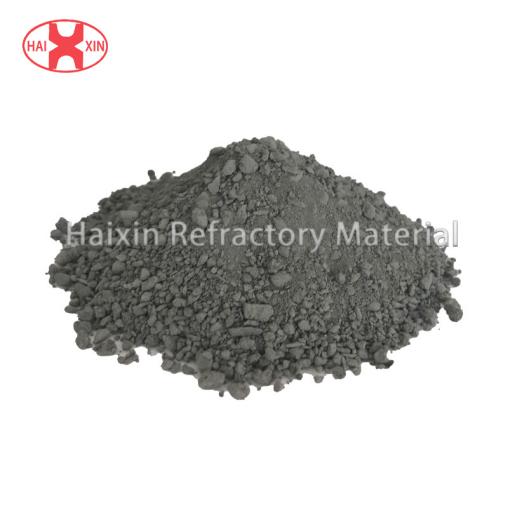
Proportion and performance of corundum refractory castables
1. Mixing ratio
The commonly used mixing ratio of corundum refractory castables is 38% to 45% of corundum particles 5 to 3 mm; 25% to 32% of 3 to 0.15 mm; 10% to 20% of corundum powder (0.09 mm); 10% to 15% of industrial alumina fine powder. In addition, CA-70 cement or aluminum hydroxide is used as a coagulant, and ≤5% of soft clay can be added as a sintering agent.
2. Performance
The performance of corundum refractory castables is as follows: bulk density 2.85~2.95g/cm3, compressive strength greater than 30MPa after drying at 110℃, compressive strength 35~60MPa after firing at 1400℃, sometimes up to 100MPa, linear change ±0.4% after firing at 1400℃, load softening temperature of 4% deformation greater than 1600℃, sometimes up to 1700℃.
How to use corundum refractory castables
1. After the castable is mixed and formed, it is naturally cured. The curing time is 3 days, and contact with water is strictly prohibited. After the natural curing expires, it can be stored indoors or outdoors. If white hair grows on the surface, it is the crystallization of aluminum salt and calcium salt in the material, which disappears after heating and does not affect the use.
2. In phosphoric acid or phosphate refractory castables, if no coagulant is added after mixing and forming, it can be heated and baked in the natural environment for 2 hours, and then demolded after obtaining strength; if a coagulant is added after mixing and forming, it should be cured in a natural environment with a temperature above 10°C, and no watering is allowed. If the ambient temperature is higher than 20°C, it can be demolded after 3-5 hours of static curing, otherwise it should be extended for about 5 hours before demolding.
Application of corundum refractory castables in thermal furnaces
Corundum refractory castables are widely used in thermal kilns. Their superior performance makes them the preferred material for key parts of high-temperature equipment in industries such as steel, nonferrous metals, chemicals, and ceramics. Specific applications are as follows:
1. Iron and steel industry: used for refractory components such as linings, pouring gates, furnace roofs, etc. in key parts of ladle, steelmaking furnace, converter, electric arc furnace, etc.
2. Nonferrous industry: used for refractory components in key parts of melting furnaces, boilers, etc. for nonferrous metals such as copper, aluminum, zinc, and tin.
3. Chemical industry: used for refractory components in high-temperature reaction equipment and furnaces in petroleum, fertilizer, petrochemical, etc.
4. Ceramic industry: used for refractory components in key parts of high-temperature kilns such as tunnel kilns, shuttle kilns, and roller kilns.
With its excellent performance and wide application, corundum refractory castables provide reliable protection for high-temperature equipment in various industries. Through reasonable mix ratio and usage methods, corundum refractory castables can greatly increase the service life of key parts of thermal furnaces, reduce maintenance costs, and create more value for enterprises. In the future, corundum refractory castables will continue to play a key role and provide continuous protection for high-temperature equipment in various industries.