

Preparation and properties of low cement refractory castables
Preparation technology and basic properties
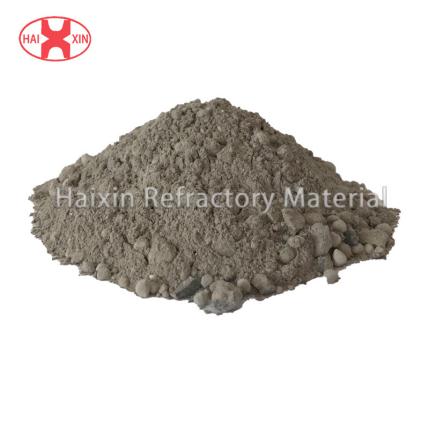
Low cement refractory castables are carefully designed and screened, and the samples are made under the best process conditions and cured under natural conditions. Its 3d room temperature compressive strength reaches 15.45MPa, and its performance is more stable after drying. This castable is based on aluminum silicate, uses first-grade clay clinker and first-grade to special-grade alumina clinker as aggregates, and is combined with refractory powders such as special-grade or first-grade alumina clinker powder and brown corundum powder, as well as ultrafine powders such as α-Al2O3 powder and silica fume, and adds an appropriate amount of composite water reducer. With the increase of heating temperature, the strength of the castable increases significantly, and the strength at 1500℃ is about 1 times higher than that when dried. Its high-temperature flexural strength and stability are also better than CA-50 cement refractory castables. In addition, the refractoriness of low cement refractory castables is as high as 1790℃, and the load softening temperature is 20 to 100℃ higher than that of CA-50 cement refractory castables, so the use temperature is also increased accordingly.
High temperature performance and thermal expansion characteristics
During the heating process, the thermal expansion rate of the castable increases first and then decreases, reaching a maximum value of 0.68% at 1250°C, and then begins to shrink slowly, but the thermal expansion rate rises slightly at 1500°C. The high strength of this high-performance castable and the increase in medium-temperature strength are due to the fact that the dehydration process of calcium aluminate hydrate is slow and continuous over a large temperature range and has little damage to the crystal structure. This well-controlled thermal expansion convergence enables low-cement refractory castables to exhibit better strength and stability at high temperatures.
Pore structure and porosity analysis
The molded body of the refractory castable presents a heterogeneous structure with a small amount of pores, in which the size and number of pores have a direct impact on the performance of the castable. By mercury intrusion, we determined the pore size distribution of the two castables. The results show that the pore size of the low-cement refractory castable is mainly distributed in the range of no more than 100nm, accounting for 70.7% to 73.2%, which is 2 to 3 times higher than that of the CA-50 cement refractory castable. After drying at 110℃, the total porosity of the two castables is equivalent. However, after firing at 800℃, the pore volume of the low-cement refractory castable only increased by about 6%, while that of the CA-50 cement castable increased by nearly 39%. This result reveals that the low-cement refractory castable has the characteristics of small total pore volume, many small capillaries and uniform distribution, that is, low porosity, excellent pore structure, poor permeability and strong resistance to slag erosion. After heating treatment, it shows the advantage of small pore size distribution and increases the damage resistance.
Slag resistance and application of low cement refractory castables
Slag resistance comparison and test results
Low-cement refractory castables show significant advantages in slag erosion resistance. Through the rotary method test, we found that when the low-cement castable is heated to 1400°C and maintained at a rotation speed of 6r/min in a blast furnace slag medium, its slag erosion depth is only 1.25mm, which is much better than the 2.65mm of the clay-bonded castable. At the same time, we also found that the less cement is used, the better the slag erosion resistance; and the higher the cement grade, the stronger the slag erosion resistance of the formulated low-cement castable. Specifically, the castable formulated with CA-70 cement is better than the castable formulated with CA-50 cement in slag erosion resistance, and the erosion amount is reduced by about 25%. Low-cement castables show better slag erosion resistance than CA-50 cement castables, especially under high-temperature blast furnace slag conditions, the penetration depth is small.
Application in thermal equipment
Low cement refractory castables are widely used in various thermal equipment due to their good fire resistance and strength characteristics. They not only perform well in general industrial furnaces, but are also particularly suitable for high temperature and wear-resistant environments. For example, low cement mullite and corundum refractory castables and low cement SiC refractory castables are also widely used in thermal equipment. Among them, mullite and corundum castables play an important role in the lining of steel rolling heating furnaces, water cooling pipe wrapping and burner bricks with their excellent performance. SiC refractory castables, with their low linear expansion coefficient, high thermal conductivity, high strength and wear resistance, perform well in thermal equipment such as power generation boilers, non-ferrous metallurgical furnaces and incinerators. The castable not only has good thermal shock resistance, but also has the advantage of thermal conductivity, which is slightly higher than other castables due to low porosity and dense structure.