

The properties of lightweight castables include refractoriness, operating temperature, bulk density, strength, thermal conductivity and permanent linear change rate after heating. Factors affecting the performance of lightweight castables involve raw materials, proportions, production processes, use environment and other factors.
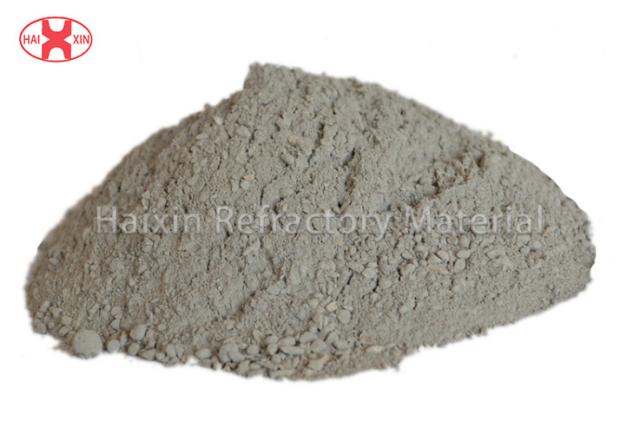
1. Nature of Raw Materials
Commonly used aggregates such as floating beads, expanded perlite, ceramsite, hollow alumina balls, etc., their chemical composition, refractoriness, and thermal conductivity directly affect the refractoriness and thermal insulation of the castable. The particle shape and particle size distribution of the aggregate affect the packing density, which in turn affects the porosity and strength of the castable.
Excessive use of cement binders will increase density and reduce thermal insulation. The amount of sol binders needs to be controlled to avoid strength loss. Organic binders decompose at high temperatures to produce pores, which can adjust density, but the residual components may affect corrosion resistance.
2.Raw Material Ratio
When the proportion of aggregate is high, the density of the castable decreases and the thermal insulation improves, but the strength may decrease; too much powder increases the density of the matrix, improves the strength but the thermal insulation is slightly worse.
Adding too much water will cause aggregate settlement, increase porosity, and significantly reduce strength; insufficient water will result in poor construction fluidity and easy generation of honeycomb defects.
Excessive use of accelerators can cause cracking. Water reducers reduce water consumption, improve fluidity, and reduce pore defects caused by water evaporation, thereby increasing strength. Expansion agents compensate for high-temperature shrinkage and avoid structural cracking, but improper use can lead to unstable volume.
3. Production and Construction Technology
Uneven mixing will cause the aggregate to separate from the matrix, resulting in local strength differences; insufficient vibration will easily produce pores, while excessive vibration will cause the aggregate to break and destroy the structure.
Cement-bonded castables need to be cured in a humid environment to promote hydration reaction. A dry environment will result in insufficient early strength. If the curing time is too short, the binder will not be fully hardened and it will be easy to crack when drying; if the curing period is too long, it will affect the construction efficiency.
A heating rate that is too fast will cause rapid evaporation of water and produce cracks; when the drying temperature is insufficient, the binder is not completely sintered and is prone to softening during high-temperature use.
4. Environmental Factors
The use temperature exceeding the refractoriness of the material will cause melting or softening. Frequent temperature fluctuations will cause stress due to thermal expansion and contraction. If the material has poor thermal shock resistance, it is easy to crack and peel.
Acidic gases or alkaline substances in the furnace gas will react with the components in the castable to form low-melting point compounds, causing structural corrosion.
The castable in the load-bearing part needs to withstand static or dynamic loads. If the strength is insufficient, it will cause collapse; the vibration environment will accelerate the fatigue damage of the material.
The performance of lightweight castables is the result of the combined effects of raw material characteristics, mix design, process control and usage conditions. In actual applications, the formula needs to be optimized according to the working conditions, and the production and construction links need to be strictly controlled to balance the requirements of density, strength, thermal insulation and durability.