

Corundum mullite bricks use corundum and mullite as the main raw materials, and a small amount of auxiliary ingredients are added according to performance requirements:
Corundum: As the main reinforcing component, it has extremely high hardness and fire resistance, which can significantly improve the mechanical strength and high temperature resistance of the brick, ensuring that it is not easily deformed or damaged in high temperature and heavy load environments.
Mullite: It is the key component that determines the thermal stability of the brick. It has a low thermal expansion coefficient and strong thermal shock resistance. It can effectively alleviate the stress impact on the brick caused by sudden temperature changes and avoid cracking. It also has excellent resistance to chemical erosion and can resist corrosion from acid, alkali slag and gas.
Auxiliary additives: Ultrafine alumina powder, ultrafine silica powder, etc. are usually added. On the one hand, they can optimize the particle grading of the raw materials and improve the density of the brick; on the other hand, they can promote chemical reactions during the firing process, reduce the firing temperature, and ensure that the brick structure is uniform and stable.
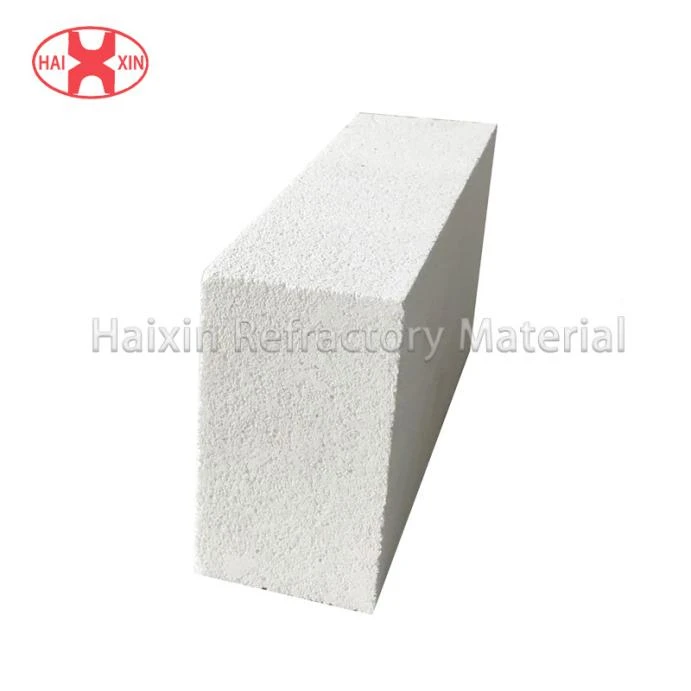
The synergistic effect of corundum and mullite lays the foundation for the excellent properties of the brick.
High fire resistance
The refractoriness of corundum mullite bricks can reach over 1750°C, far exceeding that of many common refractory materials. Even in high-temperature environments, their internal crystal structure remains stable and does not easily soften, deform, or melt. For example, in high-temperature kilns in the metallurgical industry, temperatures often reach 1500°C-1600°C during steelmaking. As a lining material, it can withstand such high temperatures for extended periods, providing a stable space for steelmaking and ensuring the smooth progress of the smelting process. In ceramic kilns, the high-temperature firing stage can reach temperatures of 1300°C-1400°C. Its high refractoriness ensures the stability of the kiln structure, allowing ceramic products to be sintered at high temperatures and achieve excellent quality.
Excellent thermal shock stability
The presence of mullite gives corundum-mullite bricks a low coefficient of thermal expansion and high thermal shock resistance. When the temperature fluctuates dramatically, the bricks avoid significant stress concentration due to thermal expansion and contraction, thus preventing damage such as cracking and spalling. For example, in industrial furnaces that require frequent startup and shutdown, the temperature rises rapidly upon startup and drops rapidly upon shutdown, with temperature fluctuations reaching hundreds of degrees. Under such operating conditions, compared to other materials with poor thermal shock resistance, corundum-mullite bricks significantly reduce the frequency of repairs and replacements caused by drastic temperature fluctuations, reducing production costs and improving production efficiency.
High strength and compression resistance
Corundum's high mechanical strength enables it to withstand heavy loads at high temperatures. At the bottom of a metallurgical furnace, it must withstand not only high temperatures but also the immense pressure of the molten metal and slag within. Its high strength and compressive strength provide stable support, ensuring the structural integrity of the furnace floor and preventing deformation and damage, thereby ensuring safe and stable metallurgical production. In the kiln lining of a cement rotary kiln, materials constantly tumble and move, exerting constant pressure and friction on the kiln walls. Corundum is able to resist these external forces, ensuring the proper operation of the kiln.
Good chemical stability
Corundum mullite bricks offer strong resistance to both acidic and alkaline slag corrosion, thanks to the inherent chemical stability of corundum and mullite. During the steelmaking process, complex slags containing both acidic and alkaline oxides are produced within the furnace. As a furnace lining material, corundum mullite bricks can effectively resist erosion by these slags, extending the service life of the lining. In high-temperature cracking furnaces and gasification furnaces in the chemical industry, internal reactions are not only characterized by high temperatures but also by the presence of various corrosive gases and chemicals. Thanks to its excellent chemical stability, corundum mullite bricks are able to operate stably in such complex chemical environments, ensuring the proper functioning of the equipment.
Low thermal conductivity
Compared to pure corundum bricks, corundum mullite bricks have a lower thermal conductivity, making them an effective barrier to heat transfer. In industrial applications requiring high thermal insulation, such as the regenerator in a glass melting furnace, corundum mullite bricks can reduce heat loss, improve energy efficiency, and lower energy costs during production. In ceramic kilns, they help maintain a uniform and stable temperature, facilitating the firing of ceramic products while reducing fuel consumption to maintain the kiln temperature, ultimately achieving energy savings and cost reductions.
In the future, corundum mullite bricks will continue to play a key role in traditional high-temperature industrial fields such as metallurgy, building materials, chemicals, and ceramics through continuous performance optimization, and will expand their application space in emerging fields such as new energy and aerospace, providing solid material support for the high-quality development of the industry.