

In fields such as industrial insulation and high-temperature equipment protection, ceramic fiber board has gradually become a popular material due to its superior performance. For businesses or individuals needing to select thermal insulation materials, a comprehensive understanding of the characteristics, applicable scenarios, and key points of use of ceramic fiber board can effectively improve equipment operating efficiency and reduce energy costs. This article will provide a detailed and practical guide to ceramic fiber board.
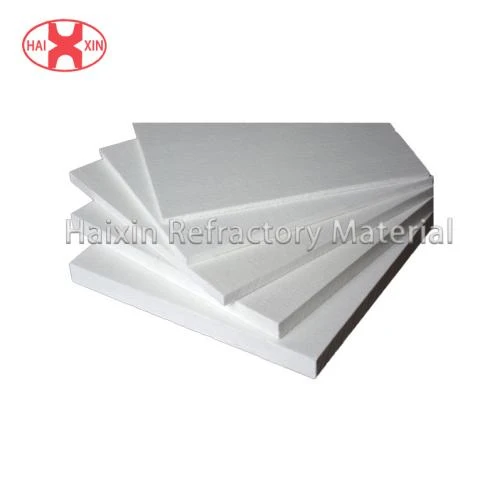
I.Core characteristics of ceramic fiber board: Why is it the preferred material?
Ceramic fiber board is a plate-shaped thermal insulation material made of ceramic fiber as the main raw material through molding, drying, sintering and other processes. Its core characteristics make it stand out among many materials, which can be summarized as follows:
(a)Excellent high temperature resistance and thermal insulation performance
(b) Combining lightweight and high strength
(c) Good chemical stability and corrosion resistance
(d) Excellent thermal shock stability
II. Applicable Scenarios for Ceramic Fiber Boards: Precisely Matching Needs
Based on the above characteristics, ceramic fiber board has a wide range of applications, covering multiple fields such as industry, construction, and new energy. Below are some typical application scenarios and selection suggestions:
(a)Industrial kilns and heating equipment
Ceramic fiberboard is commonly used as an internal lining insulation material in high-temperature equipment such as ceramic kilns, glass kilns, and metal heat treatment furnaces. For example, in ceramic roller kilns, using ceramic fiberboard with a density of 300-350 kg/m³ and a high-temperature resistance of 1260℃ as sidewalls and top linings can accelerate the kiln's heating rate by 20% while reducing fuel consumption by 15%-20%. When selecting the appropriate type, it is important to consider the kiln's maximum operating temperature and determine the board thickness based on the stress conditions of the equipment components (typically, sidewall thickness is 100-150 mm, and top lining thickness is 80-120 mm).
(b) Electricity and New Energy Sector
Ceramic fiber boards play a crucial role in the insulation of boilers and turbines in thermal power plants, as well as in photovoltaic silicon material purification furnaces and lithium battery cathode material sintering furnaces in the new energy field. Taking photovoltaic silicon material purification furnaces as an example, their internal temperatures reach over 1400℃, requiring high-purity ceramic fiber boards with a temperature resistance of 1400℃ and a density of 350-400 kg/m³ to ensure no impurities are released at high temperatures, thus avoiding affecting the purity of the silicon material. Furthermore, their use in the furnace lining of lithium battery cathode material sintering furnaces reduces heat loss, maintaining furnace temperature uniformity within ±5℃ and improving product quality stability.
(c) Building and pipe insulation
(d) Shipbuilding and aerospace
In the insulation of high-temperature areas such as ship engine rooms and smokestacks, as well as high-temperature components in aerospace equipment, ceramic fiber panels are an ideal choice due to their lightweight and high-temperature resistance. Ship engine rooms are characterized by high temperatures and limited space; using lightweight ceramic fiber panels with a thickness of 30-50mm satisfies insulation requirements without excessive space occupation or increasing the ship's weight. In the aerospace field, it can also be used as the thermal insulation layer in spacecraft reentry capsules, achieving effective high-temperature insulation through multi-layer ceramic fiber panel composites.
III. Key Points for Purchasing Ceramic Fiberboard: Avoiding Common Mistakes and Choosing the Right Product
(a)Define the actual operating parameters
(b)Focus on the authenticity of core performance indicators
(c)Select the appropriate specifications based on the installation method.
(d)Considering the balance between cost and service life
Ceramic fiber board prices vary significantly between models and specifications, so simply pursuing the lowest price isn't the right approach. For example, while standard 1260-grade ceramic fiber board is relatively inexpensive, its lifespan at 1300°C is only about one year. 1400-grade ceramic fiberboard, on the other hand, is more expensive but boasts a lifespan of over three years. From a long-term perspective, choosing a product suitable for the operating conditions and with a long service life can actually reduce overall costs. Furthermore, installation and ongoing maintenance costs should also be considered. For example, lightweight panels offer lower installation costs, while high-strength panels offer lower maintenance costs.
Ceramic fiber board, as a high-performance thermal insulation material, plays an irreplaceable role in numerous fields. By understanding its characteristics, accurately matching application scenarios, mastering key selection points, standardizing installation and maintenance, and mitigating usage risks, ceramic fiberboard can better serve production and daily life, achieving the goals of energy conservation, emission reduction, and efficiency improvement. We hope this provides a practical reference to help you rationally utilize ceramic fiberboard in practical applications and maximize its value.