

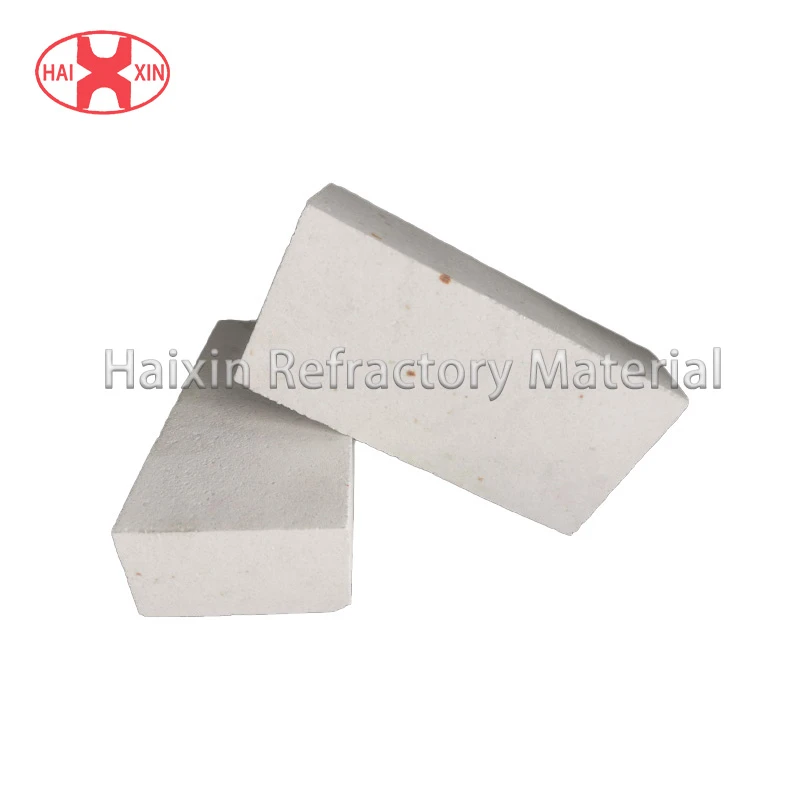
In high-temperature and high-corrosion industrial scenes, there is a material that looks ordinary but has a "steel bone" hidden inside - corundum brick. It uses alumina (Al2O3) as the main raw material, and with its unique chemical structure and physical properties, it has become the "refractory" in the fields of metallurgy, chemical industry, ceramics, etc. Today, we will decode the core competitiveness of this "hard-core brick".
1.High temperature resistance: challenging the industrial extreme temperature
The "heat-resistant gene" of corundum bricks comes from their high-purity alumina composition. Depending on the Al2O3 content (usually ≥85%), its refractoriness can reach 1770℃-2000℃, far exceeding ordinary refractory bricks (such as clay bricks with a refractoriness of about 1600℃). This feature enables it to serve stably in "flame core areas" such as steelmaking furnaces, glass kilns, and ceramic sintering kilns:
Metallurgy: In the lining of blast furnaces, the walls of electric furnaces and other parts, corundum bricks can withstand the high-temperature impact of more than 1500℃ during molten iron smelting, preventing the furnace body from softening or collapsing due to overheating.
Glass industry: The flame nozzle and heat storage chamber of the glass melting furnace are in a high-temperature environment of more than 1600℃ for a long time. The high-temperature resistance of corundum bricks ensures that the kiln can run continuously for months or even years without major repairs.
2. Anti-corrosion: "Armor" to resist chemical corrosion
In industrial production, the erosion of the furnace body by high-temperature molten materials (such as slag, glass liquid, acid and alkali gas) is a common problem. With its low porosity (≤16%) and high chemical inertness, corundum bricks have become "armor" to resist erosion.
Anti-slag erosion: In steel smelting, the acidic oxides or alkaline oxides in the slag will react chemically with the brick body. Al2O3 in corundum bricks reacts slowly with acidic slag, and can also form a high melting point phase with alkaline slag, inhibiting the erosion process.
Anti-glass molten erosion: Alkaline components such as Na2O and K2O in glass melting furnaces can easily penetrate the pores of the brick body. The dense structure of corundum bricks can greatly reduce the penetration rate and extend the kiln life.
3. "All-rounder" in industrial scenarios
The "hard core" strength of corundum bricks makes it a standard material in many industries:
Ceramic firing: The high-temperature section of shuttle kilns and roller kilns uses corundum bricks, which can withstand the erosion of gases released during the sintering of the green body, while ensuring the temperature uniformity in the kiln.
Chemical industry: In petrochemical cracking furnaces and fertilizer gasification furnaces, corundum bricks resist the dual impact of high-temperature oil and gas and corrosive media (such as H₂S, CO₂).
Emerging applications: With the development of the new energy industry, the demand for corundum bricks in lithium battery material sintering kilns and photovoltaic glass melting furnaces has grown rapidly, helping green production under the "dual carbon" goal.
4. Technology Upgrade: From "Durable to Easy to Use"
Modern industry has put forward higher requirements for corundum bricks, and technological innovation is driving them to develop in the direction of low energy consumption, long life and functionalization:
From its first application in metallurgical furnaces in the late 19th century to becoming a key material for high-end manufacturing in the 21st century, corundum bricks have silently supported the operation of global industry with their hard power of "high temperature resistance and corrosion resistance". With the advancement of materials science, this "industrial code brick" will continue to unlock more scenarios and write new legends on the "battlefield" of high temperature and corrosion.