

Lightweight high-alumina bricks are also called high-alumina insulation bricks. They are a kind of lightweight refractory material with an alumina content of more than 48%, mainly composed of mullite and glass phase or corundum. They have the characteristics of light weight, high strength, high temperature resistance, corrosion resistance, good thermal insulation performance, and good thermal shock resistance.
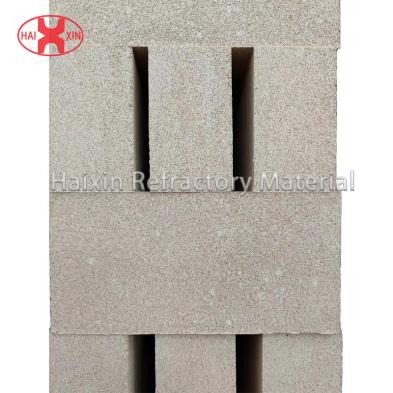
Today we will mainly introduce the key points of the process of manufacturing lightweight high-alumina bricks using the combustible addition method.
The key to manufacturing lightweight high-alumina bricks using the combustible addition method is to form a uniform pore structure through the combustion of combustibles while ensuring the high aluminum content and lightweight thermal insulation performance of the material. The following is a step-by-step description of the key points of the process:
The raw materials for manufacturing lightweight high-alumina bricks are industrial alumina, mullite concentrate, kaolin, Suzhou soil as the binding clay, and polystyrene balls as the burnt material. The ingredients are as follows:
Industrial alumina 30%, mullite concentrate 35%, kaolin 15%, Suzhou soil 20%, burnt material 1:1. The materials are mixed in a mixer, and the order of adding is: industrial alumina → Suzhou soil → mullite concentrate → kaolin → polystyrene balls → admixture → water. After forming and drying, it is fired in a tunnel kiln at a firing temperature of 1500℃ and kept warm for 16 hours. After processing according to the required size, it is the finished product.
Through the above process control, lightweight high-alumina bricks with light weight, high strength and excellent thermal insulation performance can be produced, which are suitable for high-temperature scenarios such as industrial kiln linings.