

Characteristics and application of aluminum-magnesium castables
Aluminum-magnesium refractory castable is a castable refractory material with A1₂O₃ and MgO as the main components. This castable is one of the main varieties of alkaline refractory castables. During construction, a proper amount of water or liquid binder is added and stirred to make a castable with good fluidity. After casting, it solidifies at room temperature and hardens after baking.
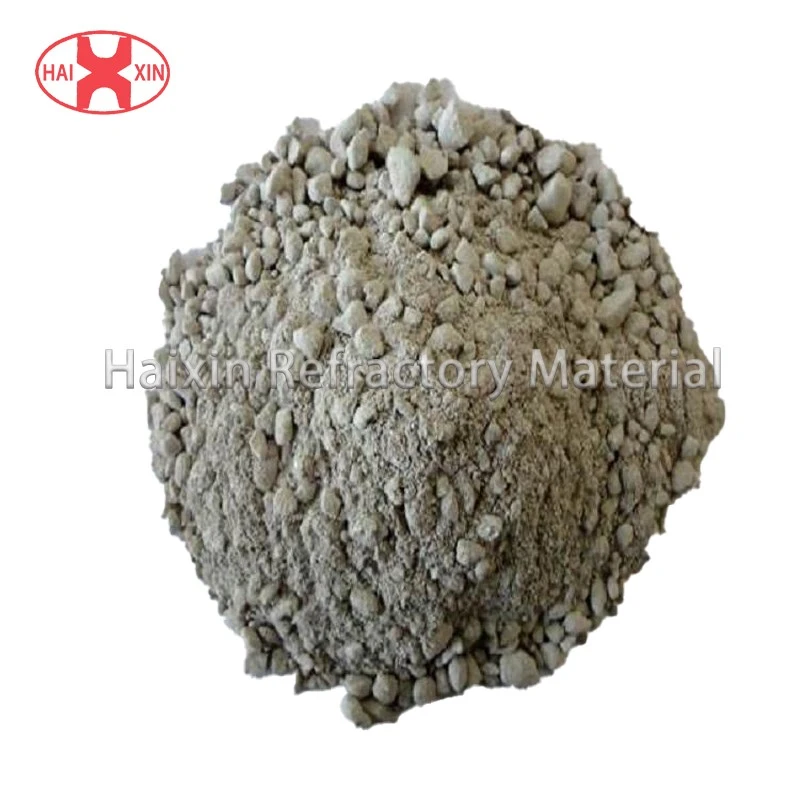
The raw materials used in aluminum-magnesium refractory castables are divided into natural and synthetic types. Natural raw materials mostly use bauxite clinker as aggregate, magnesia powder and bauxite clinker powder as matrix, and water glass is mostly used as binder. The typical physical and chemical indicators of this castable are: Al2O210%~70%, MgO 8%~15%, Fe2O3<3%, bulk density 2.45~2.65g/cm3, compressive strength 25~30MPa, drying line shrinkage 0.25%~0.35%. The operating temperature is 1500~1700℃. During the use of the castable at 1200~1300℃, Al2O2 reacts with MgO to form magnesium-aluminum spinel (MgO·Al2O2).
Aluminum-magnesium refractory castables made of synthetic raw materials have high chemical purity and good performance. This type of castable is mostly made of industrial alumina or special grade aluminum alum and lightly burned magnesium oxide as raw materials. Magnesium-aluminum spinel is synthesized in advance through grinding, balling, calcining and other processes, and then used as raw materials to make aggregates and powders. Therefore, it is also called spinel castable. In order to maintain its excellent high-temperature performance, this castable often uses pure calcium aluminate cement as a binder to make low-cement castables. The physicochemical indicators of aluminum-magnesium castables made of synthetic raw materials are: Mg05%~7%, Al2O₃90%~95%, SiO₂<0.5%. Density 3.0~3.2g/cm³, porosity 14%~16%, compressive strength 20~35MPa. Load softening temperature 1600~1650℃, drying line shrinkage 0.01%~0.05%.
Aluminum-magnesium refractory castables have excellent slag erosion resistance and thermal shock resistance. Compared with general low-cement combined high-aluminum castables, its main feature is good resistance to slag penetration. It is resistant to erosion and spalling when used on the lining of metallurgical equipment in contact with slag, and has less slag adhesion. It is mainly used to construct the overall lining of the ladle. This material has a long service life. The reason is that the presence of magnesium-aluminum spinel in the aluminum-magnesium refractory castable can effectively prevent the penetration of slag into the lining, and the lining does not form a segmented band structure, so it will not generate structural stress during use, causing the lining to peel off.
When constructing the integral lining of the ladle with aluminum-magnesium refractory castables, the vibration castable construction method is often used. The advantage of this method is that it uses the effect of mechanical vibration to increase the fluidity and filling capacity of the castable, so that the lining achieves good density and strength, and the leakage accident rate is low, and it is safe to use.
Aluminum-magnesium refractory castables are mainly used to construct the integral lining of the ladle, the lining of the molten iron ladle, the lining of the tundish and the integral lining of the steel spout.