

Sintered mullite brick is a high-performance refractory material with excellent thermal shock resistance, high temperature stability and chemical stability, so it has been widely used in many industrial fields. Therefore, it is of great significance to study how to reduce its firing temperature. This article will explore the key technologies and methods to achieve low-temperature sintering of mullite bricks.
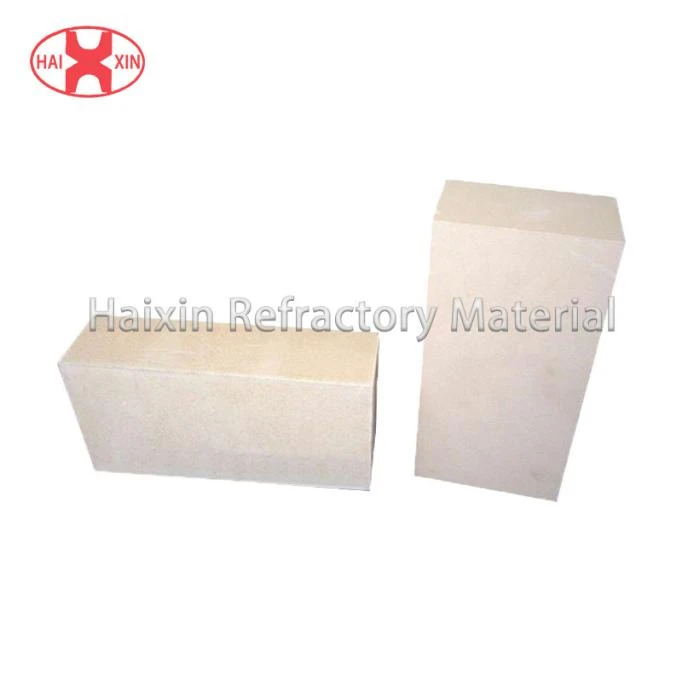
The sintering temperature of sintered mullite bricks is usually above 1600℃. Such a high sintering temperature makes it difficult to mass produce sintered mullite bricks. By utilizing the activity of active SiO2 and adding an appropriate amount of active SiO2 to the ingredients, sintered mullite bricks can be sintered at 1550℃.
The fused mullite is made into particles of less than 4mm, the fused corundum is made into fine powder of less than 0.088mm, and the fineness of active SiO2 is less than 0.076mm. The material ratio is as follows: 60% fused mullite particles, 36% fused corundum fine powder; 4% active SiO2 fine powder. The ingredients are mixed and formed on a friction brick press. The green body is dried at 110°C for 24 hours and then fired at 1550°C.
The physical indicators of this sintered mullite brick are as follows: apparent porosity 20.88%, volume density 2.61g/cm³, room temperature compressive strength 84.4MPa, 1550℃, 50h high temperature creep rate 0.796%.
By optimizing raw materials, adjusting formulas, using advanced sintering technology and improving processes, the firing temperature of mullite bricks can be effectively reduced, energy consumption can be reduced and economic benefits can be improved. In the future, further research on nanotechnology, composite additives and new sintering methods will provide more possibilities for low-temperature sintering of mullite bricks.