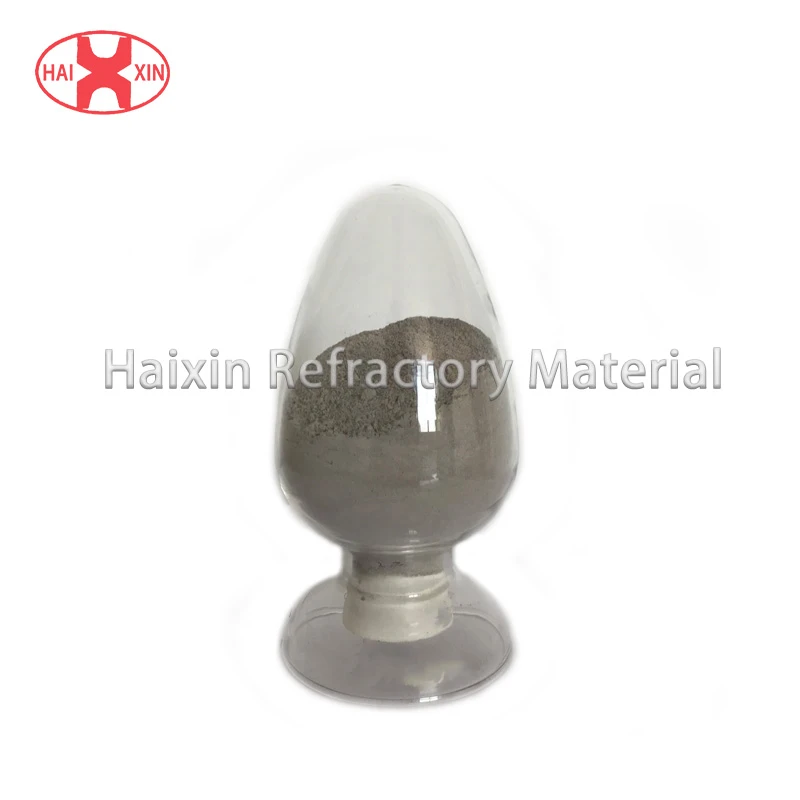
Characteristics and application of magnesia refractory clay
Magnesia refractory mud uses various magnesia sands as raw materials, combined with clay, bentonite or chemical binders, or directly prepared with brine (MgCl₂) to make mud. Its core characteristics are refractoriness exceeding 1700°C, excellent high-temperature volume stability, thermal shock resistance and resistance to alkaline slag erosion. It is mainly used in open-hearth furnaces, electric furnaces, oxygen converters, non-ferrous metal smelting furnaces and other parts where magnesia bricks, magnesia-chrome bricks, magnesia-alumina bricks and other masonry are used.
YB/T 5009-93 divides magnesia refractory mud into two grades, MF-82 and MF-78, according to physical and chemical indicators. The requirement for particle composition is: 100% of particles are less than 1mm. Among them: the magnesia refractory mud used for repairing furnace walls is less than 0.5mm for not less than 90%, and less than 0.125mm for not less than 50%; the magnesia refractory mud used for masonry is less than 0.5mm for not less than 97%, and less than 0.088mm for not less than 50%. This material has good plasticity and bonding strength. It can be used as a joint material for masonry refractory bricks, and can also be directly applied to repair damaged parts of kilns, which can effectively extend the service life of equipment. The water-cement ratio must be strictly controlled during use, and construction must be carried out in an environment of 10-35℃. It must be protected from freezing and exposure during maintenance.