

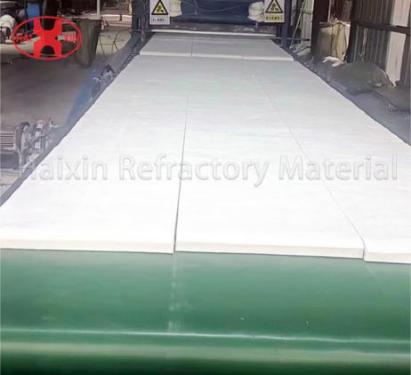
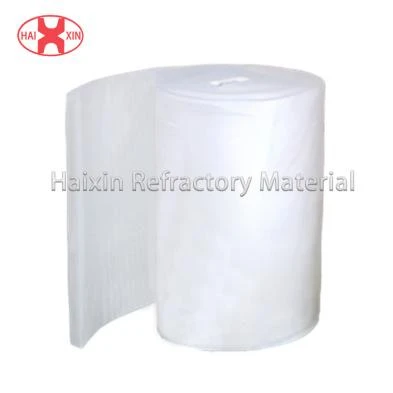
Aluminum silicate ceramic fiber blanket is mainly made of aluminum silicate fiber through high-temperature melting, blowing and spinning processes. Its unique structure and performance make it a key material in the field of modern industry and technology.
What are the performance characteristics of aluminum silicate ceramic fiber blanket?
1.Low thermal conductivity and low heat capacity The thermal conductivity is only 0.03W/(m·K). The porous structure inside the fiber effectively blocks heat transfer and significantly reduces the surface temperature of the device. The low heat capacity characteristic allows it to maintain thermal balance with extremely low energy consumption in rapid temperature rise and fall scenarios.
2.Thermal stability and thermal shock resistance: This material can maintain structural stability at high temperatures of 1100℃~1400℃. The fiber elasticity can compensate for the stress caused by thermal expansion and withstand rapid cooling and heating shocks (temperature difference can reach 1000℃) without cracking.
3.Heat insulation, fire prevention and sound absorption The porous fiber structure can absorb high-frequency sound waves, with a noise reduction coefficient of more than 0.8; it also has Class A fire resistance, does not burn in a 1000°C flame, and does not release smoke. Combined with the low thermal conductivity characteristics, it can simultaneously meet the equipment's sound insulation, fire prevention and energy saving needs.
4.Tensile strength and mechanical properties After being strengthened by the needle punching process, the longitudinal tensile strength of the fiber blanket reaches more than 80kPa, which can resist equipment vibration and air flow erosion. Its flexibility supports cutting into special-shaped pieces, and the structural stability is further improved by multi-layer superposition or composite metal mesh.
5.Chemical stability Aluminum silicate fiber has strong tolerance to acid, alkali and molten metal, and can maintain stable performance in corrosive environments such as chemical reactors and nuclear power equipment. It does not contain asbestos, does not release harmful substances at high temperatures, and meets environmental protection and industrial safety standards.
In what fields can aluminum silicate ceramic fiber blanket be used?
Industrial furnaces: As the wall lining material of steel smelting furnaces and glass melting furnaces, it can not only isolate high temperatures but also improve the thermal efficiency of the furnace.
High temperature pipeline protection: used as pipeline insulation layer in petrochemical cracking units and power boilers to prevent heat loss and reduce the outer shell temperature.
Aerospace: Used in aircraft engine compartment fireproof layers to protect precision equipment in ultra-high temperature environments.
New energy equipment: As thermal insulation lining for lithium battery kilns and photovoltaic silicon wafer sintering furnaces, it ensures production safety and energy consumption control.
Can aluminum silicate ceramic fiber blanket be customized according to customer requirements?
Support flexible size customization. Its production process supports the adjustment of size parameters on demand, and thickness, width and length can be customized according to equipment or engineering requirements. We need to clarify the customer's operating temperature, environment, size, life requirements, etc., formulate a plan, conduct trial production and test performance (such as thermal conductivity, thermal shrinkage), and start production after confirming the parameters.
Aluminum silicate ceramic fiber blankets continue to play a key role in energy conservation, consumption reduction and safe production through innovation in materials science. In the future, they may expand to more extensive application scenarios in emerging fields such as nuclear energy and hydrogen energy.