

LS Acid Resistant Putty is a high-performance material specially used for corrosion-resistant engineering, and is widely used in acidic environment protection in chemical, metallurgical, electric power and other industries.
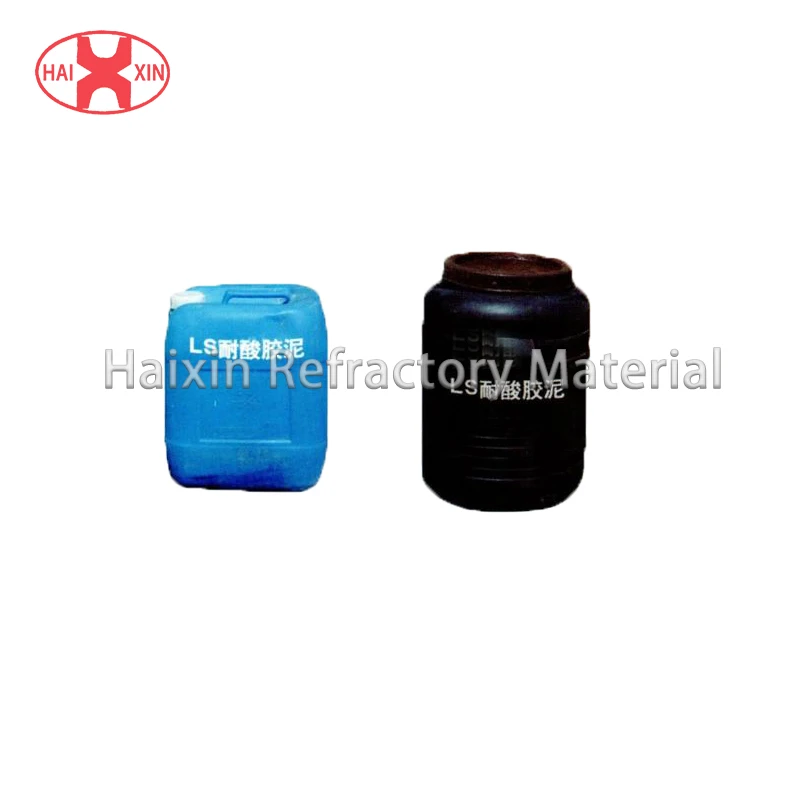
1. Basic composition of LS acid-resistant mortar
Binder: such as epoxy resin, furan resin, phenolic resin or water glass (sodium silicate), providing corrosion resistance and bonding.
Curing agent: reacts with resin to form a stable structure (such as acid curing agent, amine curing agent, etc.).
Acid-resistant filler: quartz powder, diabase powder, graphite powder, etc., to enhance mechanical strength and acid resistance.
Additives: improve workability, crack resistance or temperature resistance (such as glass fiber, toughening agent).
2. Performance characteristics of LS acid-resistant mortar
Acid resistance: It can resist corrosion from strong acids such as sulfuric acid, hydrochloric acid, nitric acid and acidic gases (the specific acid resistance level needs to refer to product parameters).
Temperature resistance: It usually withstands -20℃ to 150℃ (high-temperature mortar can reach more than 200℃).
Bonding strength: It is firmly bonded to substrates such as concrete, steel, and tiles.
Permeability resistance: The dense structure prevents acid penetration and protects the base layer.
Mechanical properties: Wear-resistant and impact-resistant, suitable for dynamic or heavy-load environments
3. Main application areas of LS acid-resistant mortar
Chemical equipment: corrosion protection of reactors, storage tanks, and pipeline linings.
Chimney/flue: Acid corrosion protection of the inner wall of chimneys in coal-fired power plants and smelters.
Sewage treatment: Anti-seepage and anti-corrosion of acid tanks, neutralization tanks, and electrolytic cells.
Building corrosion protection: Laboratory floors, pickling workshop walls, and floor protection layers.
Repair engineering: Repair concrete or metal structures corroded by acid.
4. Common problems and solutions
Glue peeling: The base surface is not treated thoroughly or the humidity exceeds the standard. The base surface needs to be cleaned and dried again.
Poor curing: Check the ratio and temperature, adjust the amount of curing agent or increase the ambient temperature.
Surface cracks: It may be caused by too thick construction or too large temperature difference. It is recommended to apply in layers and control the thickness.