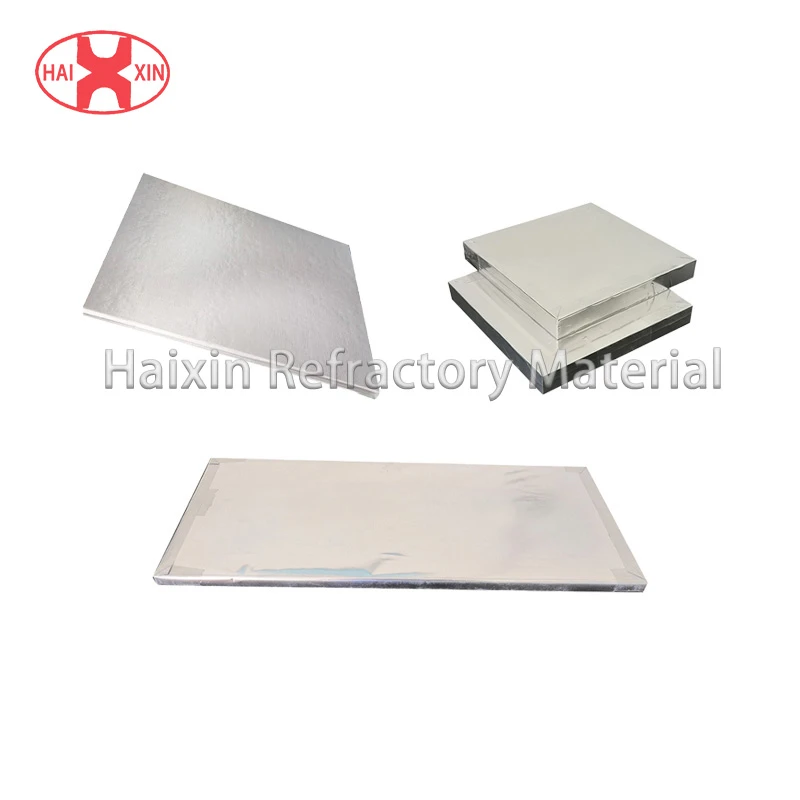
Microporous Nano Thermal Insulation Board shield in the field of thermal insulation
Microporous Nano Thermal Insulation Board is a high-performance thermal insulation material developed based on nanotechnology. Through the synergistic effect of nanoparticles and microporous structures, it significantly reduces the thermal conductivity of the material and is one of the cutting-edge products in the field of high-temperature thermal insulation. Its core structure is composed of nano-scale silica, ceramic fibers and sunscreens, etc., and through precision processes, evenly distributed micron-nanoscale pores (pore size is smaller than the free path of gas molecules) are formed, which greatly inhibits the convective heat transfer caused by the movement of gas molecules. At the same time, the reduced contact area between nanoparticles further reduces solid heat conduction. In addition, the added sunscreen (such as titanium dioxide, silicon carbide) can efficiently reflect infrared radiation heat, achieving the simultaneous blocking of the triple heat transfer path of "conduction-convection-radiation".
The thermal conductivity of Microporous Nano Thermal Insulation Board can be as low as 0.023 W/(m·K) (about 0.013 at room temperature) in a high temperature environment of 800℃~1000℃, and the thermal insulation efficiency is 3-5 times that of traditional ceramic fiberboard. The thickness can be reduced by 50%-70% under the same thermal insulation effect, which significantly optimizes the equipment space layout. It has A1-level fireproof, corrosion-resistant, and thermal shock-resistant properties, and is widely used in metallurgical kilns, petrochemical pipelines, new energy vehicle battery packs, aerospace thermal protection, and building fire isolation. Compared with traditional thermal insulation materials, its lightweight (density 300-500 kg/m³) and low heat capacity characteristics can also reduce the energy consumption of equipment start-up and shutdown, help industrial energy conservation and carbon reduction, and is the preferred solution for high-temperature conditions with both efficient thermal insulation and economy.