

Aluminum silicate ceramic fiber paper is widely used in multiple industrial fields and special scenarios due to its excellent properties such as high temperature resistance, heat insulation and insulation.
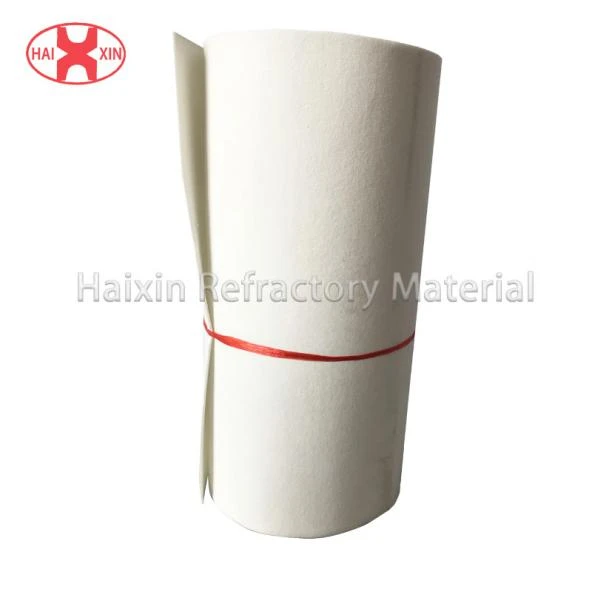
However, the service life of aluminum silicate ceramic fiber paper is not a fixed value, but is affected by many factors, usually fluctuating from a few months to several years or even longer. The following are the key factors affecting its service life and the life reference in common scenarios:
Key Factors Affecting Service Life
Operating Temperature
Aluminum silicate ceramic fiber paper has a clear upper temperature limit. If used for a long time in an environment close to or exceeding its rated temperature, the fiber will accelerate aging, crystallization or powdering, resulting in reduced strength, thermal insulation performance degradation, and significantly shortened life. If used in a stable environment below the rated temperature, the aging speed will slow down and the life can be greatly extended.
Temperature Fluctuation and Thermal Shock
Frequent temperature rises and falls (such as the frequent start and stop of industrial furnaces) will cause stress fatigue of fibers due to thermal expansion and contraction, gradually causing cracking and delamination, shortening the service life. A stable high temperature environment (such as a continuously running kiln) will cause less damage to it and have a more stable service life.
Mechanical Stress and Physical Wear
If used in situations where repeated disassembly, friction or pressure is required (such as gaskets and high-frequency vibration parts), the fiber paper may be damaged due to tearing, squeezing or abrasion, and its lifespan depends on the intensity and frequency of mechanical action. Static laying is less susceptible to mechanical damage and has a longer lifespan.
Chemical Environment
Although it has good chemical stability, long-term exposure to hydrofluoric acid, concentrated alkali, molten metal or corrosive gas will gradually corrode the fiber structure, resulting in performance failure and shortened life. In a dry, non-corrosive environment, the life can be significantly extended.
Product Quality and Installation Process
High-quality fiber paper has stronger resistance to aging and damage and a longer lifespan; inferior products may fail prematurely due to fiber fragility or ineffective binders. If wrinkles, loose splicing or excessive stretching occur during installation, local aging will be accelerated and the overall lifespan will be affected.
Tips For Extending Service Life
Strictly use aluminum silicate ceramic fiber paper within the rated temperature range to avoid overheating; reduce sudden temperature changes and optimize the equipment start-up and shutdown procedures; avoid excessive mechanical stress and ensure flatness and no stretching during installation; add an additional protective layer in corrosive environments; conduct regular inspections and repair local damage in a timely manner to prevent damage from expanding. In short, the actual lifespan needs to be evaluated in combination with specific usage conditions, and regular maintenance and reasonable use are the key to extending its lifespan.