

Low cement castable is an important building material widely used in the industrial field. With its excellent properties such as high strength, high wear resistance and low shrinkage, it plays an important role in the lining of industrial equipment, the construction and repair of furnaces. Below, we will introduce low cement castable in detail from the aspects of its definition, characteristics, application fields and development trends.
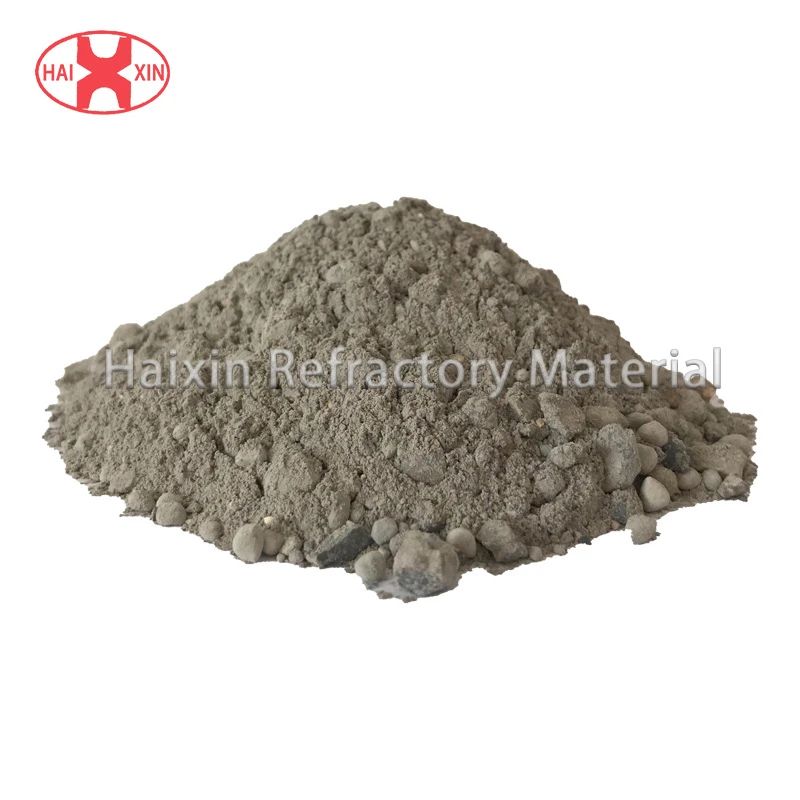
1. Definition of low-cement castable
Low-cement castable is a building material that is made by mixing raw materials such as aggregate, powder, binder and a small amount of cement in a certain proportion, adding water and stirring, and then pouring into shape. Its characteristic is that the cement content is low, so compared with traditional high-cement castable, it has a lower thermal expansion coefficient and higher wear resistance.
2. Characteristics of low cement castables
1.Low thermal expansion coefficient: The cement content of low cement castables is low, which makes its thermal expansion coefficient relatively small. This means that in high temperature environments, low cement castables have better thermal shock resistance and can effectively reduce the damage of equipment caused by thermal stress.
2.High strength and high wear resistance: The aggregates and powders in low cement castables are carefully selected and proportioned to give them high strength and high wear resistance. This allows low cement castables to maintain good performance under harsh working conditions such as heavy loads and high-speed wear.
3.Good construction performance: Low cement castables have good fluidity and self-compactness, and can form a uniform lining in the complex internal structure of equipment. Low cement castables also have a shorter initial setting time and higher early strength, making the construction process more efficient and convenient.
4.Environmental protection and energy saving: The low cement castable has a lower cement content, which not only reduces energy consumption in the production process, but also helps reduce the generation of industrial waste. Low-cement castables do not produce harmful substances during their preparation and use, and are harmless to the environment and human health.
3. Application fields of low cement castables
1.Lining of industrial equipment: Low cement castables are widely used in the lining of various industrial equipment, such as cement rotary kilns, steel smelting furnaces, non-ferrous metal smelting furnaces, etc., due to their high strength, high wear resistance and good thermal shock resistance. In these equipment, low cement castables can effectively protect the inner wall of the equipment and extend the service life of the equipment.
2.Construction and repair of furnaces and kilns: Low cement castables have good construction performance and high early strength, which makes them widely used in the construction and repair of furnaces and kilns. The use of low cement castables can quickly form a solid furnace structure and improve the fire resistance and service life of the furnace.
3. Other fields: In addition to the above application fields, low cement castables can also be used to make wear-resistant floors, refractory bricks and other building materials. Low cement castables also play an important role in the power, chemical, metallurgical and other industries.
4. Development trend of low-cement castables
With the continuous advancement of industrial technology and increasingly stringent environmental protection requirements, low-cement castables will continue to be optimized and improved in terms of performance and application. In the future, the development trend of low-cement castables will be mainly reflected in the following aspects:
1.Further improve performance: further improve the strength, wear resistance and thermal shock resistance of low-cement castables by optimizing raw material selection, improving production processes and developing new binders.
2.Broaden the application field: With the continuous emergence of new materials and new technologies, the application field of low-cement castables will be further broadened. For example, in the fields of new energy and environmental protection, low-cement castables are expected to play a greater role.
3.Environmental protection and energy saving: On the premise of meeting performance requirements, further reduce the cement content and energy consumption of low-cement castables, reduce waste emissions in the production process, and achieve green production and sustainable development.
As an important building material, low-cement castables have broad application prospects in the industrial field. With the continuous advancement of technology and the improvement of environmental protection requirements, low-cement castables will continue to be optimized and improved in terms of performance and application, making greater contributions to industrial development.