

Silicon mullite brick is a high-performance refractory material, which is a composite of silicon carbide (SiC) and mullite (3Al2O₃·2SiO2). It combines the excellent properties of both and is widely used in key parts of high-temperature equipment such as cement kilns and metallurgical furnaces.
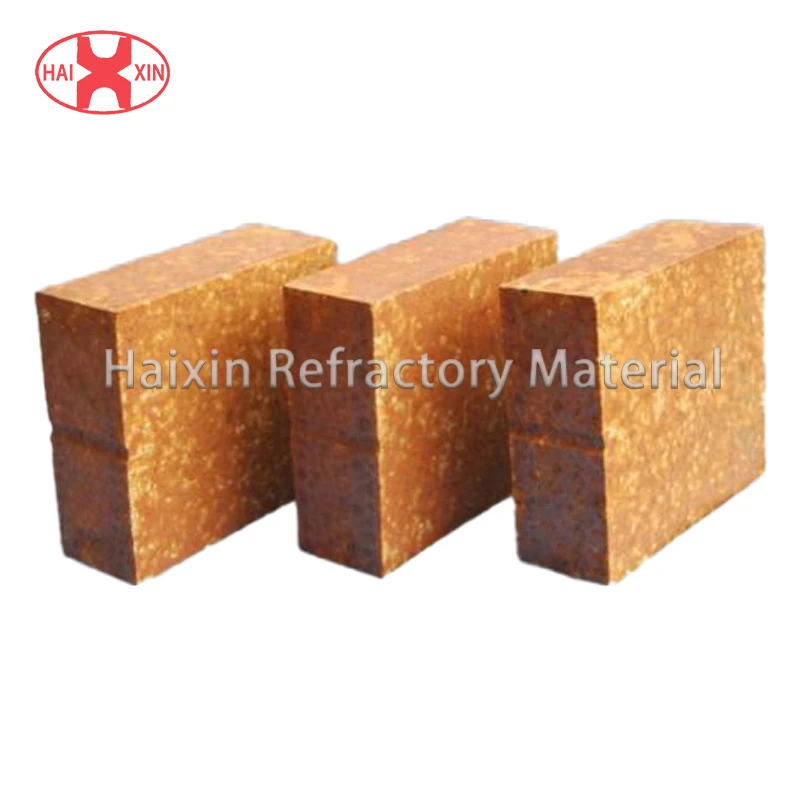
The core composition and structure of silicon mullite bricks:
The main raw material is silicon carbide (SiC): accounting for about 50%~70%, providing high thermal conductivity, wear resistance and corrosion resistance. Mullite (3Al₂O₃·2SiO₂) accounts for about 20%~40%, giving the material good high-temperature volume stability and thermal shock resistance.
Core characteristics of silicon-molybdenum bricks:
High temperature performance: refractoriness up to 1650~1750℃, load softening temperature (0.6% deformation)>1550℃.
Excellent thermal shock resistance (1100℃ water cooling cycle>20 times without cracking).
Wear resistance and erosion resistance: Silicon carbide has high hardness (Mohs hardness 9.2), and is resistant to clinker, alkali vapor, and slag erosion.
Strong resistance to corrosive gases such as sulfur and chlorine in cement kilns.
Thermal conductivity and energy saving: The thermal conductivity is high (3~5 W/(m·K)), which can promote stable attachment of the kiln skin, reduce the surface temperature of the kiln body, and reduce heat loss.
Production process of silicon-mullite bricks:
Raw material ratio: Mix according to the ratio of silicon carbide and mullite, add binder and additives.
Molding: High pressure press molding (pressure>150MPa) to ensure the density of the green body.
Firing: High temperature sintering (1350~1450℃) in a reducing atmosphere to promote the combination of SiC and mullite.
Typical application scenarios of silica-molybdenum bricks:
Cement kiln: transition zone/firing zone: replace magnesia-chrome bricks to solve the problem of chromium pollution.
Kiln mouth guard plate: resist clinker erosion and high temperature deformation.
Metallurgical industry: blast furnace throat, hot air duct lining.
Chemical kiln: wear-resistant layer of waste incinerator and coal gasification furnace.
Construction and use precautions
Masonry requirements: Brick joints should be controlled to ≤2mm, and special refractory mud (silicon molybdenum mortar) should be used.
Avoid direct contact with alkaline refractory materials (prone to reaction).
Kiln baking system: Slowly increase the temperature (<50℃/h) to prevent thermal stress cracking.
Maintenance: Regularly check the kiln skin attachment and repair local peeling in time.