

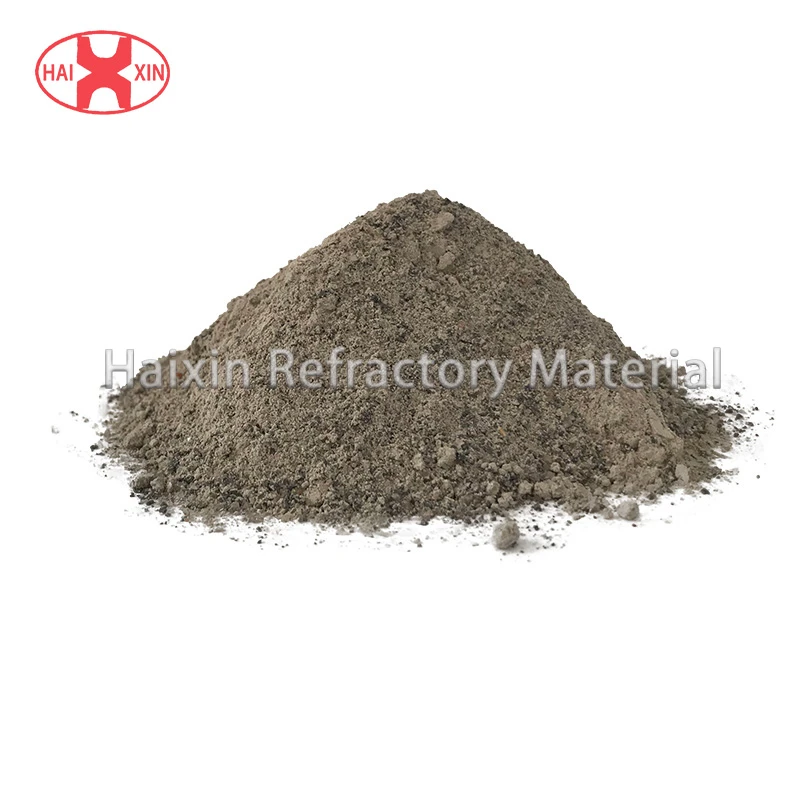
Andalusite (chemical formula Al₂SiO₅) is a natural aluminum silicate mineral. It is widely used in refractory castables because of its excellent volume stability, mechanical strength and corrosion resistance at high temperatures, so it is called andalusite Refractory Castable. Adding andalusite to the castable formula can significantly improve the high-temperature performance of the material and extend its service life. The role and principle of adding andalusite to andalusite castables are as follows:
1. High-temperature volume stability
Andalusite undergoes mullite reaction at high temperatures (above 1300°C), converting into mullite (3Al₂O₃·2SiO₂) and free SiO₂, accompanied by a volume expansion of about 3%. This characteristic can effectively offset the sintering shrinkage of the castable at high temperatures, prevent cracks and structural spalling caused by shrinkage, and thus improve the overall stability of the andalusite castable.
2. Enhanced thermal shock resistance
The micro-expansion of andalusite at high temperature can relieve thermal stress, and the mullite crystals generated by its transformation are tightly combined with the matrix, making the andalusite castable not easy to crack under rapid cooling and heating conditions, and suitable for kilns, ladles and other working conditions that require frequent temperature changes.
3. Improved mechanical strength and wear resistance
The mullite generated by andalusite transformation has high hardness, high strength and good chemical stability, so that the andalusite castable can still maintain high compressive and flexural strength at high temperatures, and enhance wear resistance, suitable for high mechanical impact and wear environments (such as blast furnace tapping, cement rotary kiln, etc.).
4. Excellent resistance to chemical erosion
Mullite has high resistance to acidic or weakly alkaline slag, molten metal, etc., so andalusite castables are suitable for highly corrosive environments in industries such as steel, glass, and chemicals.
5. Optimize microstructure and reduce costs
Andalusite resources are abundant and its price is lower than that of synthetic mullite and other raw materials. The in-situ reaction to generate mullite can reduce production costs, while optimizing the microstructure of the castable and improving its density and corrosion resistance.
Adding andalusite to castables can improve the material's volume stability, thermal shock resistance, mechanical strength and corrosion resistance mainly through its high-temperature mullite reaction, making it have a longer service life and better performance in high-temperature equipment in industries such as metallurgy, building materials, and chemicals. Therefore, andalusite has become one of the important raw materials for high-performance refractory castables.