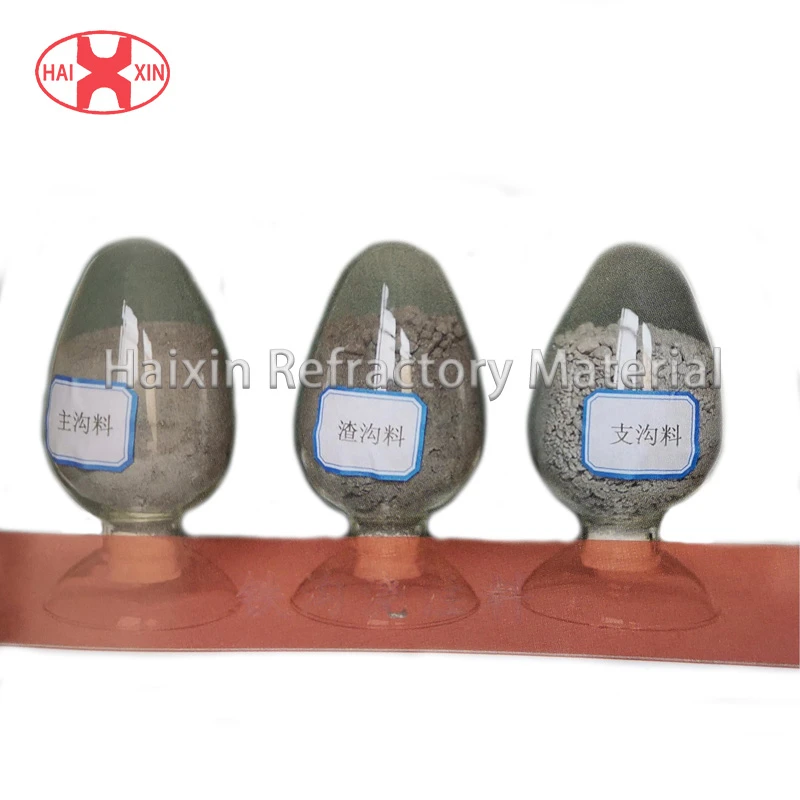
A new type of unshaped refractory material - refractory castable for blast furnace tapping channel
The blast furnace tapping ditch refractory castable is a castable refractory material used as the lining of the blast furnace tapping ditch. It is a type of high-alumina refractory castable containing silicon carbide and carbon. The tapping ditch refractory castable is a new type of amorphous refractory material developed in the late 1970s. It has the characteristics of large iron throughput, long service life, low refractory material consumption, and convenient construction.
Composition:
Refractory castables for blast furnace tapping channel are mainly made of high-alumina, silicon carbide, carbon raw materials and binders. High-alumina raw materials can be selected from one or more of fused or sintered corundum, brown corundum, spinel, and bauxite clinker. Silicon carbide raw materials can be selected from primary or secondary black silicon carbide. Carbon raw materials can be selected from asphalt, coke, graphite or electrode powder. Binders can be selected from bonding clay with good dispersibility, ultrafine oxide powder and pure calcium aluminate cement.
Features:
The type of castable for the tapping ditch is reasonably selected according to the capacity of the blast furnace and the heat load of the tapping ditch. Most medium-sized blast furnaces have an upper slag discharge port, and most of the slag is discharged from the upper slag discharge port before tapping. The amount of slag flowing into the main tapping ditch during tapping is relatively small, and the main tapping ditch can use the same castable regardless of the slag line and iron line. The castables for the iron ditch and slag ditch are required to have good slag resistance, and the castables for the pouring ditch are required to have good resistance to molten iron scouring.
Application:
The lining of the trough casting material does not need to be removed when repairing. After removing the residue and iron residue on the surface of the lining, the repair casting can be carried out. The new and old trough linings have good bonding ability. Compared with ramming materials, the amount of waste is reduced by more than 50%. After multiple repairs, the total iron flow can reach 300,000 to 1 million tons.
The trough of a blast furnace with more than two tapholes can be cast on site, and the trough of a blast furnace with a single taphole can be made into prefabricated parts for on-site installation.