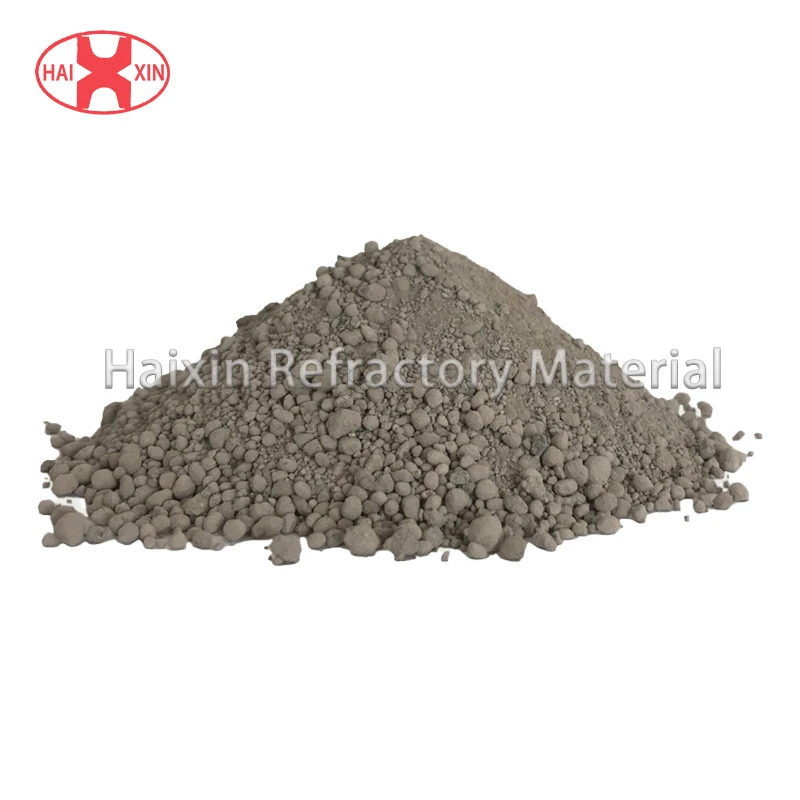
Fire Resistant Plastic is an amorphous refractory material with excellent plasticity, specially designed for the complex working conditions of high-temperature industrial equipment. It is made of a mixture of granular refractory aggregate (such as alumina, corundum, magnesia or silicon carbide), fine powder, binder (phosphate, water glass, etc.), plasticizer (such as clay) and functional additives. It is soft mud or block at room temperature and can be directly shaped by ramming, extrusion, etc. After construction, it is sintered at high temperature to form a dense structure. It has both high refractoriness and structural stability. It is the core high-temperature protection material in the fields of metallurgy, building materials, petrochemicals, etc.
So what effect does the amount of binding clay added to Fire Resistant Plastic have on the properties of the plastic?
Binding clay acts as a plasticizer and binder in Fire Resistant Plastic. From the perspective of construction, increasing the amount of binding clay added is beneficial to increasing the plasticity of refractory plastic and facilitating construction. Since binding clay shrinks in volume during heating, from the perspective of high-temperature volume stability of plastic, the less binding clay is added, the better. Therefore, the amount of binding clay added should be based on the plasticity of refractory plastic, and not too much should be added. In addition, binding clay contains more impurities. If it is added in too much, the hot strength and corrosion resistance of plastic will be greatly reduced.
In addition, the amount of combined clay will also affect the porosity and density of the material, which in turn affects the erosion resistance and thermal shock stability. It is necessary to balance plasticity and high temperature performance, and there is usually an optimal range. It may also be necessary to consider the different performance requirements in different application scenarios. For example, in repair situations that require higher plasticity, the amount of clay may be appropriately increased, while in high temperature areas, the amount is controlled to ensure refractoriness.