

The content of silicon carbide (SiC) in silicon carbide refractory castables varies greatly depending on the application scenario and performance requirements. The silicon carbide refractory castables produced by Haixin Company are usually divided into three categories: conventional, medium-high content and high purity.
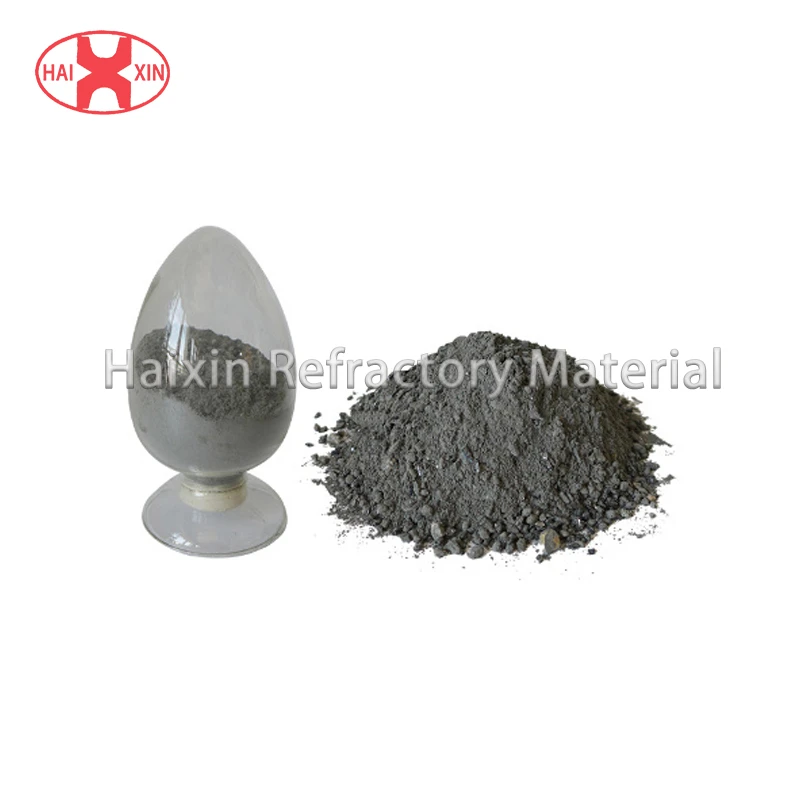
1. Conventional type: The silicon carbide content is about 30%~60%. The product has a low cost and takes into account both wear resistance and fire resistance. It is suitable for boiler wear-resistant linings, ordinary kiln tools, iron ditch materials and other parts.
2. Medium-high content type: The silicon carbide content is about 60%~80%. The product has excellent wear resistance, thermal shock resistance, and medium oxidation resistance. It is suitable for blast furnace throats, tapholes, cement rotary kiln linings and other parts.
3. High purity type: The silicon carbide content is about 80%~95%. The product has extreme high temperature resistance and corrosion resistance. It needs to be matched with antioxidants. It is suitable for waste incinerators (resistant to alkali metal corrosion), gasification furnaces, ceramic sintering rollers, etc.
Key factors affecting SiC content in silicon carbide refractory castables:
Using temperature: When >1600℃, the SiC content needs to be increased (≥70%) to maintain stability.
Corrosive environment: 60%~80% SiC is required in the contact parts of molten metal or slag (such as iron channel materials).
Thermal conductivity requirements: High thermal conductivity scenarios (such as heat exchange components) require high SiC content (≥80%).
Cost control: Low SiC content (30%~50%) can reduce costs by adding corundum, alumina, etc.
Notes:
Anti-oxidation design:
When the SiC content is greater than 70%, antioxidants (such as Si powder, Al₂O₃) must be added, otherwise high-temperature oxidation will lead to loose structure.
Construction performance:
Casting materials with high SiC content have poor fluidity and need to optimize particle grading or use dispersants.
Baking system:
The higher the SiC content, the stricter the heating rate needs to be controlled during baking (especially below 600°C).