

The main raw material for manufacturing lightweight silica bricks is crystalline silica, the auxiliary raw material is silica sandstone, the mineralizer is calcined gypsum, and the binder is sulfite pulp waste liquid. The ingredients are as follows: crystalline silica 75-80%, silica sandstone 20-25%, calcined gypsum 5-7%, sulfite pulp waste liquid 1-2%.
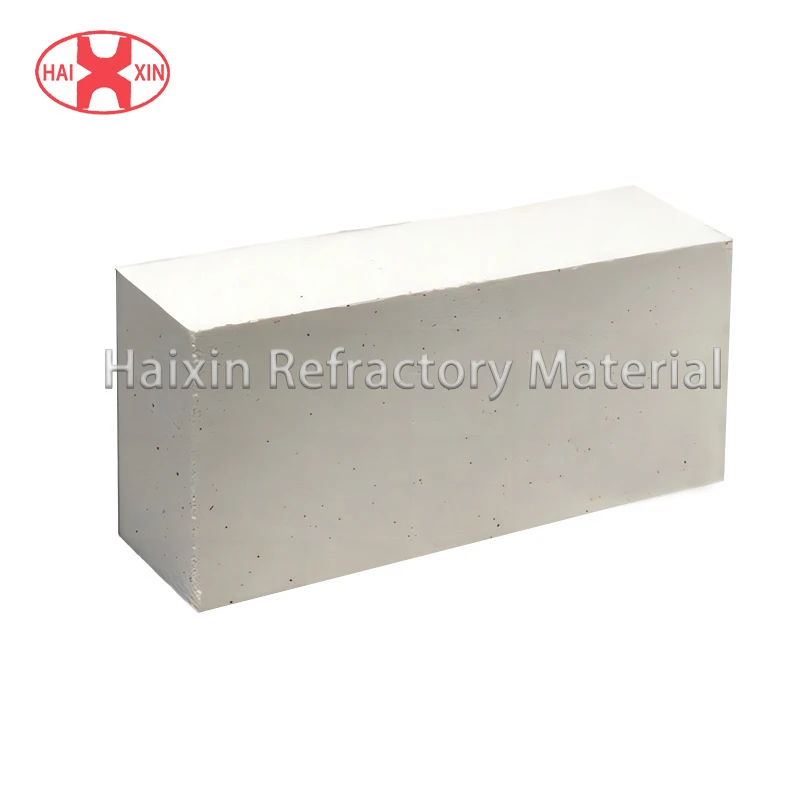
The steps of making lightweight silica bricks are to first make silica and silica sandstone into fine powder with a particle size of less than 0.088mm, mix them according to the above ingredients and add 30~40% water. After grinding, the mud density is controlled to be 1.7~1.8g/cm³.
Sodium rosinate foaming agent is prepared with rosin and alkali, and the ratio is rosin: water: NaOH = 10:10:1. After the three are mixed and heated, the bone glue solution is added. The ratio of bone glue is bone glue: water = 22:78. Before using the foaming agent, dilute the foaming agent with 4~5 times hot water. And foam for 10~15min.
The silica slurry and the foaming agent are placed in a beating drum to prepare the foamed slurry. In order to improve the strength of the semi-finished product, 1% bone glue and 0.5% alum can be added.
The forming of lightweight silica bricks is carried out on a drying car. Newspaper is spread on the aluminum plate of the drying car, the mud is injected into the mold, and then the mold frame is knocked with a small hammer to make the foam mud vibrate so that the structure of the green body is uniform. The drying car carrying the green body is pushed into the tunnel dryer for drying. The inlet temperature of the dryer is 100-120℃, the outlet temperature is 50-60℃, the drying time is 20-24h, and the residual moisture of the green body after drying is less than 0.8%. The firing of lightweight silica bricks is carried out in a downdraft kiln, the firing temperature is 1360-1370℃, and the heat preservation is 40-48h. The products out of the kiln are finished products after cutting and grinding.
By controlling the density of the mud, various products with a bulk density of 0.4g/cm³ to 1.2g/cm³ can be manufactured.