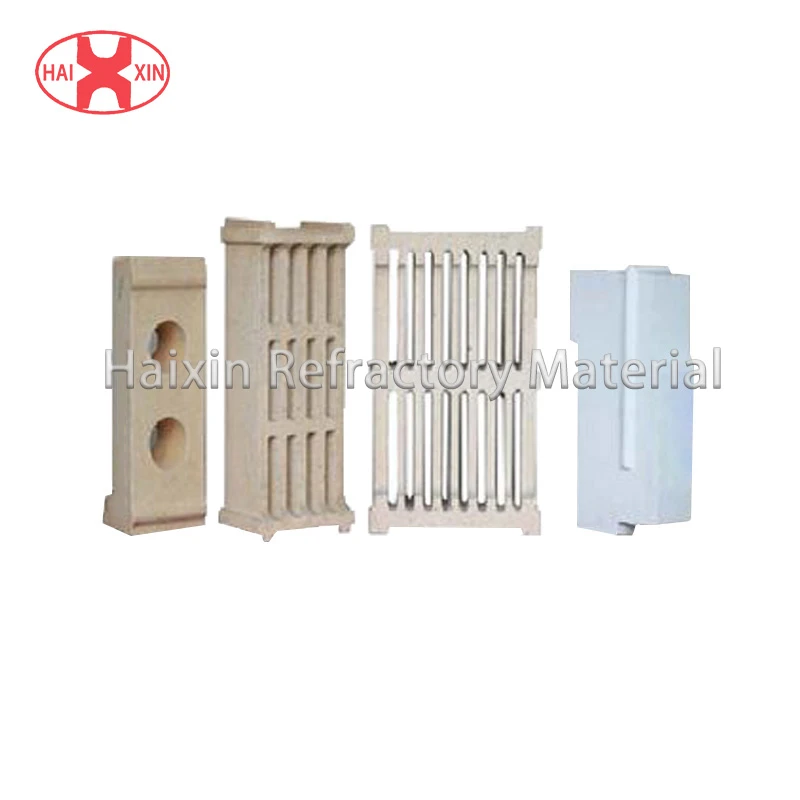
Coke ovens are mainly used for coking, which heats coal to decompose it into coke. This process requires high temperatures, so refractory materials must be resistant to high temperatures, corrosion, and have good thermal shock stability.
Refractory Material for Coke Oven are the core materials for ensuring the long-term stable operation of coke ovens in the coking industry. They are mainly used to construct high-temperature parts of coke ovens, such as the furnace body, combustion chamber, carbonization chamber, and furnace door. The working environment of coke ovens is extremely harsh, with the temperature inside the furnace as high as 1300-1450°C. They must withstand the severe thermal shock caused by periodic coal loading and coke pushing, chemical erosion by coal gas and coke slag, and impact of mechanical loads. Therefore, Refractory Material for Coke Oven must have extremely high refractoriness, excellent thermal shock stability, good slag erosion resistance, and high-temperature volume stability.
Traditional Refractory Material for Coke Oven are mainly silica bricks, which have a silica content of more than 93%. They have a high load softening point (about 1650°C) and a low thermal expansion coefficient at high temperatures, and can adapt to the periodic temperature fluctuations of coke ovens. The crystal transformation characteristics of silica bricks enable them to form a stable quartz structure at high temperatures, which effectively resists thermal stress cracking. In addition, high-alumina bricks, corundum bricks and silicon carbide products are also used in specific parts of coke ovens, such as furnace doors, ramp areas and other areas susceptible to mechanical wear or chemical erosion. Modern coke ovens also use a composite structure design to optimize thermal efficiency and structural strength through the combination of different materials (such as silica bricks and clay bricks).
With the trend of coke ovens becoming larger and more efficient, refractory products for coke ovens are developing in the direction of long life, low thermal conductivity and environmental protection. For example, low creep silica bricks, nano-modified materials and environmentally friendly refractory coatings are being developed to reduce energy consumption and extend the service life of coke ovens to more than 40 years.