

The main component of corundum bricks is alumina (Al2O3), which is famous for its excellent high temperature performance and chemical stability. In the chemical composition of corundum bricks, the content of alumina is usually very high, generally above 90%, and some can even reach 99%. This high-purity alumina gives corundum bricks good refractory properties, allowing them to remain stable in high temperature environments up to 1800 degrees Celsius without deformation or damage. Due to its excellent high temperature performance and mechanical strength, it is widely used in high temperature industrial environments.
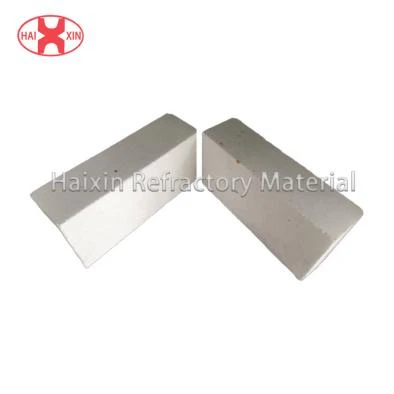
The main characteristics of corundum bricks
1. High refractoriness: The refractoriness of corundum bricks is as high as 1790℃ and above, which is suitable for high temperature working environment.
2. High mechanical strength: Corundum bricks have good compressive strength and wear resistance, and are not easy to break under high temperature and mechanical impact.
3. Excellent chemical stability: Due to the stability of Al2O3, corundum bricks have strong resistance to corrosion of acidic or alkaline slag at high temperature.
4. Good thermal shock resistance: Some modified corundum bricks, such as composite bricks with mullite or zirconium corundum, have excellent thermal shock resistance and can adapt to rapid changes in temperature.
5. Low thermal conductivity: The thermal conductivity of corundum bricks is low, which can better reduce heat loss and improve the thermal efficiency of industrial kilns.
Main categories of corundum bricks
1. Ordinary corundum brick: Made of high-purity corundum, it has high hardness and corrosion resistance.
2. Mullite corundum brick: Add mullite to improve thermal shock resistance, suitable for environments with large temperature fluctuations.
3. Zirconium corundum brick (AZS brick): Contains zircon components, which enhances corrosion resistance and anti-scouring properties, and is mostly used in glass kilns and other fields.
4. Carbon-containing corundum brick: Add carbon or silicon carbide to corundum bricks to further improve wear resistance, and is mostly used in steelmaking blast furnaces.
The main application areas of corundum bricks
1. Iron and steel industry
• Lining materials for high-temperature smelting equipment such as converters, electric furnaces, and refining furnaces.
• Components such as slide plates, stoppers, and pouring systems for continuous casting.
2. Nonferrous metal smelting
• Linings for smelting furnaces and refining furnaces for nonferrous metals such as aluminum, copper, and nickel.
3. Glass industry
• Regenerator lattice bricks and charging port bricks for glass melting furnaces.
4. Cement industry
• Linings for high-temperature firing zones of cement rotary kilns.
5. Chemical industry
• Linings for high-temperature reactors and cracking furnaces.
6. Ceramic and refractory industry
• Linings for high-temperature kilns, such as ceramic kilns, tunnel kilns, etc.
7. Energy industry
• Linings for high-temperature waste gas treatment equipment and gasifiers.
Due to its excellent performance, corundum bricks are key refractory materials in high-temperature industrial production. They can operate stably for a long time under harsh conditions to ensure normal production and efficiency.