

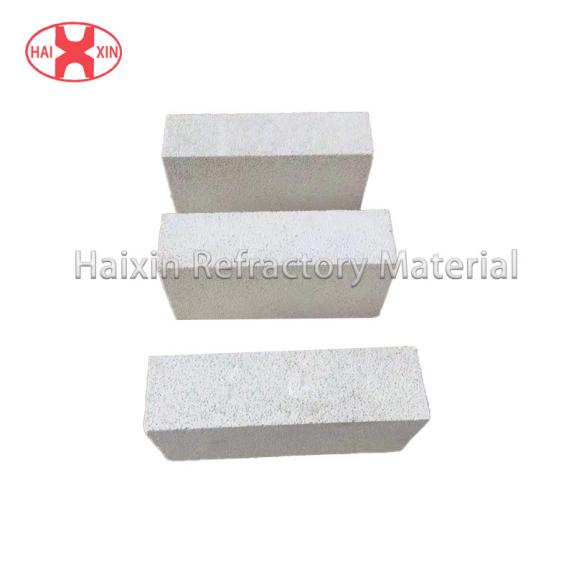
Lightweight corundum brick is a new type of high-temperature refractory material. Due to its low density, high compressive strength, good thermal conductivity and other characteristics, it is widely used in various high-temperature occasions, such as steel smelting, glass manufacturing, petrochemical and other fields.
Its manufacturing process involves several key links. The following is an analysis of the main process points:
The raw material for manufacturing lightweight corundum bricks is fused corundum, and the burnt material is polystyrene foam balls. The manufacturing process adopts the production process of general lightweight bricks, using vibration molding method for molding and firing in a downdraft kiln.
The amount of burnt material to be added is determined according to the required volume density of the product. The mixing is carried out in a mixing mill. The order of adding materials: first add the foam balls and part of the binder, mix for 2 to 3 minutes, then add the fused corundum fine powder and the remaining binder, and mix for another 10 minutes before discharging. The moisture content of the mud is controlled at 13 to 14%. After vibration molding, it is made into a green body.
The volume of polystyrene foam balls increases sharply at 90-110℃, then liquefies and vaporizes and disappears. Therefore, the temperature of the green body should be raised slowly during the drying process. The residual moisture after drying is 2-3%.
The firing is carried out in a downdraft kiln. The temperature should be raised slowly during the low-temperature stage. The final firing temperature is 1600℃ and the temperature is kept for 8 hours.
The manufacturing process of lightweight corundum bricks involves multiple key links such as raw material selection, lightweight processing, molding, drying, sintering and post-processing. Shandong Haixin Refractory Materials Co., Ltd. produces high-performance lightweight corundum bricks through advanced technical equipment and strict quality control, which has won wide recognition in the market. In the future, the company will continue to be committed to technological innovation and provide customers with better refractory solutions.