

Clay refractory bricks are aluminum silicate refractory materials made of refractory clay as the main raw material, through molding, drying and high-temperature sintering. The Al2O3 content is usually 30% to 48%. Due to its good thermal shock stability, moderate refractory performance and low cost, it is widely used in high-temperature kilns in the metallurgical, building materials, chemical and other industries. This article discusses the performance characteristics of clay refractory bricks and their application in high-temperature kilns.
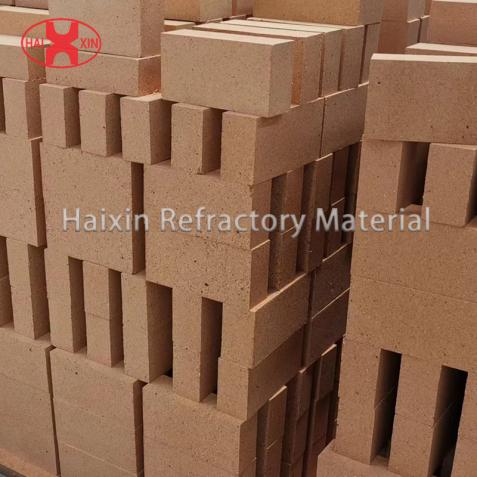
Performance characteristics of clay refractory bricks
Refractory performance: The refractoriness is generally between 1580 and 1750℃, which can meet the use requirements of most industrial kilns.
Thermal shock stability: Due to the presence of a certain amount of SiO2, its thermal expansion coefficient is low, it can withstand drastic changes in temperature and is not easy to crack.
Chemical corrosion resistance: It has a certain resistance to acidic slag, but is easily corroded in strong alkali or high CaO environments.
Mechanical strength: The compressive strength at room temperature is usually between 20 and 50MPa, and it can withstand a certain mechanical load.
Economic efficiency: The raw material source is wide, the production process is mature, and the price is lower than high-end refractory materials such as high-alumina bricks and magnesia bricks.
Application of clay refractory bricks in high temperature kilns
(1) Iron and steel metallurgical industry
Blast furnace hot blast furnace: used in the medium and low temperature parts of the hot blast furnace (such as the checker bricks in the heat storage chamber), which can withstand periodic temperature changes.
Rolling steel heating furnace: the parts that are not directly in contact with the high temperature flame, such as the furnace top and furnace wall, take advantage of its good thermal insulation and thermal shock stability.
(2) Cement industry
Rotary kiln preheating zone and decomposition zone: the temperature is between 800 and 1100°C, and clay bricks can resist alkali vapor erosion while reducing masonry costs.
Grate cooler and tertiary air duct: used in areas with large temperature fluctuations to reduce damage caused by thermal stress.
(3) Glass and ceramic industry
Glass melting furnace heat storage chamber: used in medium and low temperature areas, to withstand exhaust gas scouring and temperature changes.
Ceramic kiln kiln car bricks: used as kiln car lining bricks to reduce heat loss and increase the service life of the kiln car.
(4) Chemical industry
Coke oven door and flue: used in areas with relatively low temperatures but requiring heat shock resistance.
Gasifier: Furnace lining material, suitable for non-strong reducing atmosphere environment.
Clay refractory bricks still play an important role in high-temperature kilns due to their good thermal shock resistance, economy and wide applicability. Although higher-grade refractory materials are required in highly corrosive and ultra-high temperature environments, the rational use of clay bricks can effectively reduce production costs and ensure stable operation of kilns under medium and low temperature conditions and large temperature fluctuations. In the future, through material modification and structural optimization, its application scope is expected to be further expanded.