

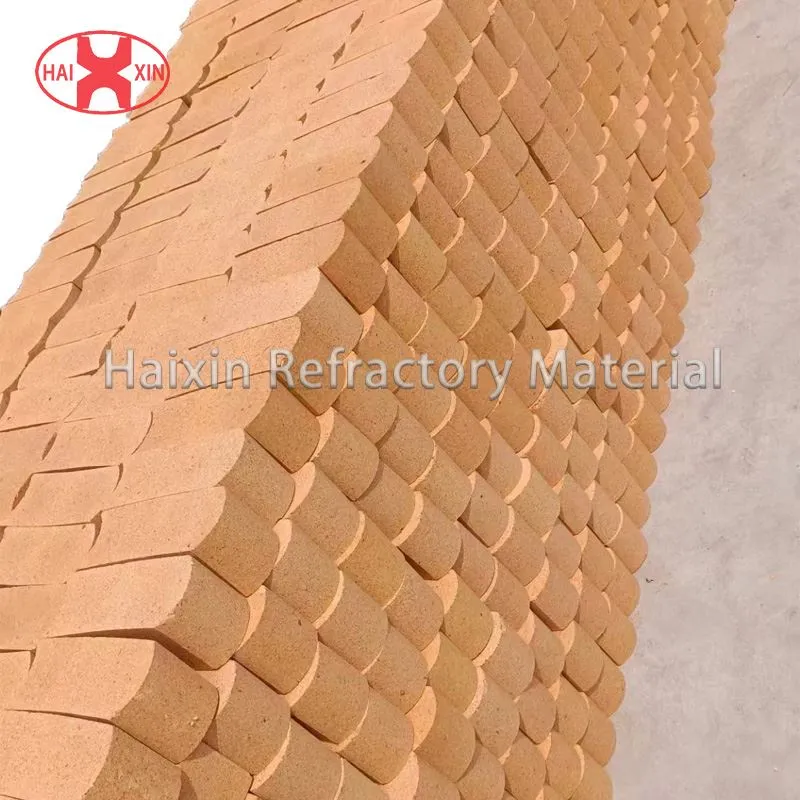


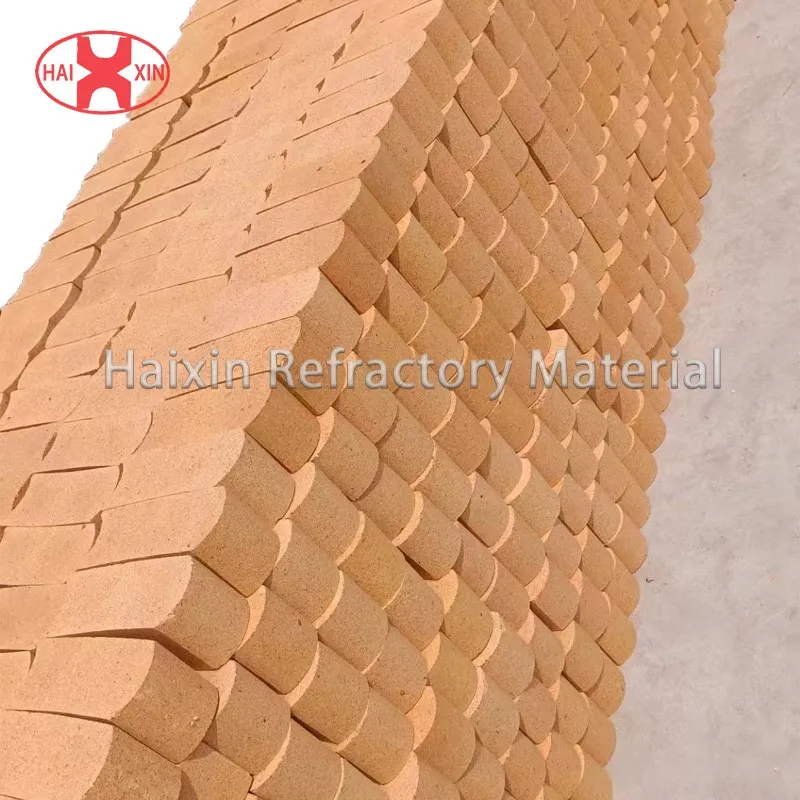
Clay bricks for ingot casting
Refractory bricks for casting refer to clay bricks used in the process of pouring molten steel from a ladle into an ingot mold. They include ladle lining bricks and bricks for steel casting (including sleeve bricks, plug bricks, nozzle bricks, seat bricks, funnel bricks, center casting pipe bricks, center bricks, flow bricks, flow tail bricks, and ingot mold bottom bricks).
The products have good high temperature performance, accurate size and low production cost. Therefore, all countries in the world now use semi-dry method to produce ingot clay bricks.
Performance The main reason for the damage of clay bricks for ingot casting during the steel casting process is the chemical erosion and scouring of high-temperature molten steel and slag, as well as the influence of sudden temperature changes. The function and quality of bricks directly affect the quality of steel and are also related to safe production.
Products Description
Ladle lining bricks The technical performance of ladle clay lining bricks is Al2O336%~44%, refractoriness 1690~1750℃, load softening temperature T0.6 (0.2MPa) 1370~1430℃, reburning line change (1400℃, 2h) 0%~0.3%, apparent porosity 18%~19%, and room temperature compressive strength 29.4~39.2MPa. When high-temperature molten steel is poured into the barrel, the barrel lining is subjected to rapid scouring and thermal shock, as well as chemical erosion by the molten steel and slag remaining in the barrel. Therefore, clay lining bricks should have low impurities, high density and high precision dimensions, and be fired at high temperatures to obtain better thermomechanical properties than ordinary clay bricks.
Flow steel bricks The physical and chemical properties of flow steel bricks: Al2O336%~40%, refractoriness 1690~1710℃, reburning line change (1350℃, 2h) +0.1%~-0.3%, apparent porosity 17%~25%. This group of bricks requires good thermal shock resistance, so the porosity of the product is controlled between 17%~25%. Low porosity has poor thermal shock resistance, and high porosity has poor erosion resistance. At the same time, accurate external dimensions are required. Poor quality products will crack during use and cause steel leakage, so strict requirements are placed on the quality of flow steel bricks.
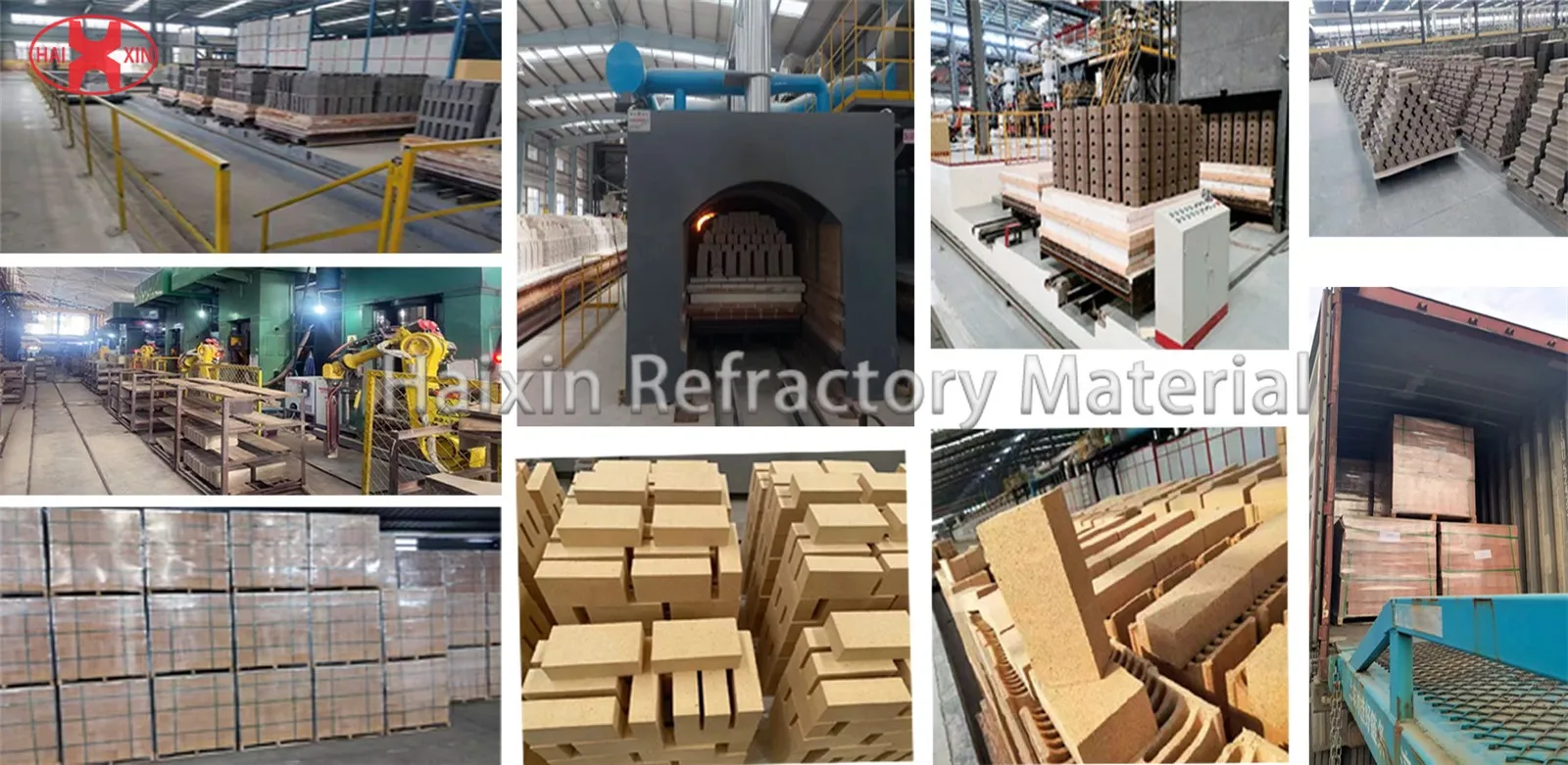
Production process Ingot clay bricks are produced by semi-dry method, and the process is the same as clay bricks.
Ingot clay bricks are solid bricks, hollow bricks, square bricks, and round bricks. Single-sided pressurization is used during molding, and special equipment for double-sided pressurization can also be used. Reasonable tolerances must be maintained in mold design, processing, and carburizing to press out qualified brick blanks. The molding pressure is 40~80MPa, and the brick bulk density is 2.10~2.38g/cm3. Ingot clay bricks are mostly square tubes and round tubes. They need to be installed vertically or sideways during firing. The height of the brick stack generally does not exceed 900mm to avoid deformation due to excessive pressure. The plug bricks and water outlet bricks should be blocked when loading the kiln to avoid direct contact with the flame and cracks.
Refractory products for casting
|
Brand/Item |
Fire clay |
||||
|
HX-N-40 |
HX-N-40 |
HX-N-40 |
HX-N-40 |
HX-N-36 |
|
|
Al2O3% |
≥40 |
≥40 |
≥40 |
≥40 |
≥36 |
|
Fe2O3% |
|||||
|
Apparent Porosity % |
≤22 |
15-25 |
≤23 |
17~25 |
17~25 |
|
Bulk Density g/cm³ |
|||||
|
Refractoriness ℃ |
≥1710 |
≥1710 |
≥1710 |
≥1720 |
≥1700 |
|
Permanent Linear Change % |
1350℃×2h 0~ -0.3 |
1350℃×2h +0.1~-0.3 |
1350℃×2h 0.1~-0.3 |
||
Hot Tags: clay refractory bricks for casting, China clay refractory bricks for casting manufacturers, suppliers, factory, Burner Brick, High Strength Wear resistant Ceramic Castable