

As a core refractory material for industrial kilns, high alumina refractory bricks have won global market recognition for their excellent high-temperature resistance and erosion resistance.
I. Classification Standards for Three Grades of High Alumina Refractory Bricks
The core basis for classifying high alumina bricks is the Al2O3 content, which directly determines their key properties such as high-temperature resistance and erosion resistance. The industry-standard classification is as follows:
Grade I high alumina refractory bricks: Al2O3 content ≥75%, some premium products can reach over 85%, the mineral composition is mainly mullite-corundum, the firing temperature needs to be controlled at 1500℃-1600℃, and it is the core material for high-specification industrial scenarios.
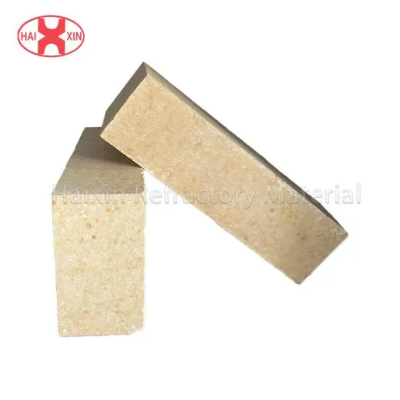
Grade II high alumina refractory bricks: Al2O3 content 60%-75%, they are mullite materials, and the firing temperature is similar to that of Grade I bricks, balancing performance and cost-effectiveness.

Grade III high alumina refractory bricks: Al2O3 content 48%-60%, low mullite content, firing temperature slightly lower (1450℃-1500℃), clay ratio in the batch can be flexibly adjusted, no need to worry about secondary mullite formation.
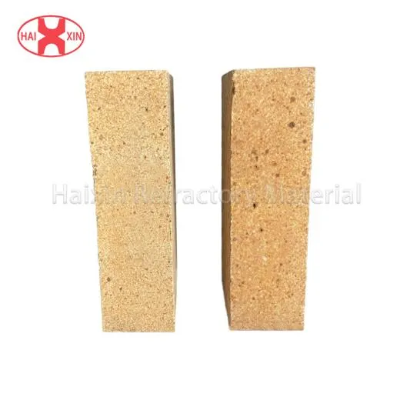
II. Performance Differences Between Different Grades of High Alumina Refractory Bricks
1.Grade I high alumina refractory bricks – a safety barrier for high-temperature and complex working conditions.
With a refractoriness of up to 1770℃-1790℃ and a load softening temperature of ≥1500℃, it has extremely strong resistance to slag erosion and thermal shock stability. It can maintain structural stability even in high-temperature environments above 1600℃ for a long time and is not easy to crack or peel off.
2. Secondary high alumina refractory bricks – a cost-effective choice, suitable for medium- and high-temperature conventional working conditions.
With a refractoriness of 1750℃-1770℃ and a load softening temperature of 1450℃-1500℃, it has better resistance to acid and alkali corrosion than clay bricks and semi-silica bricks, and can meet the medium and high temperature requirements of most industrial kilns. Moreover, its cost is 15%-25% lower than that of Grade 1 bricks.
3. Grade III High Alumina Refractory Bricks – An Economical Solution for Medium and Low Temperature Working Conditions
With a refractoriness of 1700℃-1750℃ and a load softening temperature of 1420℃-1480℃, it possesses basic thermal shock resistance and corrosion resistance, moderate thermal conductivity, and good formability, and can produce various specifications such as standard bricks and irregular-shaped bricks.
III. Typical Application Scenarios of High Alumina Refractory Bricks of Different Grades
1. Grade I high alumina refractory bricks
Steel industry: Hot blast stove regenerator and key components of blast furnace lining;
Glass industry: Glass furnace melting furnace, regenerator grating;
Ceramic industry: High-temperature zone of tunnel kiln, burner bricks of roller kiln;
Other industries: Cement rotary kiln firing zone, non-ferrous metal smelting furnace lining.
2.Secondary high alumina bricks
Steel industry: Linings and insulation layers for heating furnaces and soaking furnaces;
Cement industry: Rotary kiln transition zone, preheater lining;
Chemical industry: Side walls of carbon furnaces and calcium carbide furnaces;
Non-ferrous metals: furnace walls of medium-frequency furnaces and reverberatory furnaces.
For operating conditions with minimal temperature fluctuations and no highly corrosive media, secondary high alumina bricks can significantly reduce procurement costs while ensuring production line stability, making them a mainstream choice for small and medium-sized enterprises.
3.Grade III High Alumina Bricks
Auxiliary parts of kilns: insulation layer, flue, and chimney lining of high-temperature kilns;
Low-temperature industrial furnaces: lime kilns, drying kilns, and low-temperature sections of hot blast stoves;
Small boilers, incinerator linings, and load-bearing structures with low requirements for fire resistance.
Priced 10%-20% lower than Grade II high-alumina bricks, they are suitable for bulk purchases for large-area installations, and their ease of installation reduces on-site cutting waste.
IV. Key Selection Guidelines for Procurement
1. Define the core selection criteria
Based on the kiln's maximum operating temperature, first-grade bricks are preferred for temperatures exceeding 1500℃, second-grade bricks for 1300℃-1500℃, and third-grade bricks for 1000℃-1300℃.
When strong acid or alkali slag or molten metal corrosion is present, first- or second-grade bricks should be preferred; in medium- or low-temperature scenarios without corrosive media, third-grade bricks are sufficient.
For load-bearing parts and areas in direct contact with high temperatures, select Grade 1/2 bricks; for insulation layers and auxiliary structures, select Grade 3 bricks or lightweight high-alumina insulating bricks.
2. Key Points for Supplier Verification
The requirements include providing third-party testing reports with ISO9001 quality management system certification and CMA/CNAS certification, clearly specifying core indicators such as Al2O3 content and load softening temperature;
Examine whether the facility possesses equipment such as fully automated tunnel kilns and hydraulic brick-making machines to ensure batch-to-batch performance fluctuations are ≤5%.
Does the manufacturer support the customization of irregular-shaped and special-shaped bricks? Can the formula be adjusted according to the working conditions?
Confirm the stock level, delivery cycle for bulk orders, and whether supporting services such as construction guidance and after-sales maintenance are provided.
3. Lifecycle cost considerations
Avoid focusing solely on the unit price. While the initial purchase cost of Grade 1 bricks is high, the replacement cycle is long and downtime losses are minimal, resulting in lower overall long-term costs.
If the operating temperature is only 1200℃, choosing grade 3 bricks will save about 12%-18% of the annual cost compared to grade 2 bricks, without affecting the performance.
V. Common Selection Misconceptions
1. A higher Al2O3 content is not necessarily better!
The choice of bricks should be matched to the operating conditions. For example, using grade 1 bricks in low-temperature kilns would result in cost waste, while using grade 3 bricks in high-temperature conditions would lead to frequent replacements and affect production efficiency.
2. We cannot focus solely on refractoriness while ignoring the load softening temperature!
The load softening temperature directly determines the stability of bricks under high-temperature loads. For example, blast furnace linings must simultaneously meet the requirements of refractoriness ≥1750℃ and load softening temperature ≥1500℃.
3. Construction compatibility cannot be ignored!
For irregularly shaped kilns, suppliers that support customization should be selected to avoid on-site cutting that could reduce the strength of the bricks. It is recommended to request the manufacturer to provide masonry drawings and construction instructions.
Shandong Haixin Refractory Materials Co., Ltd. in China is ISO9001 certified and possesses complete third-party testing reports. We support custom-made irregular-shaped bricks, mixed wholesale orders, and construction guidance. Bulk orders have short delivery cycles, and our global logistics network is highly efficient. Whether you have needs for core components in high-temperature kilns or require cost control in medium- and low-temperature applications, you can find a suitable high alumina refractory brick solution. Welcome to inquire and request samples; let's work together to achieve mutual success in the global industrial refractory materials market!