

Hey there! I'm a supplier of Mullite, and today I'm gonna walk you through how Mullite gets processed into usable products. It's a pretty interesting journey, so let's dive right in.
First off, what is Mullite? Well, Mullite is a really important refractory raw material. You can check out more about it here. It's got some great properties like high refractoriness, good thermal shock resistance, and low thermal expansion. These features make it super useful in a bunch of industries, especially those that need materials to withstand high temperatures.
Mining and Initial Extraction
The process starts with mining. Mullite can be found in natural deposits, but nowadays, a lot of it is also synthetically produced. When it comes to natural mining, we've got to locate the deposits first. This involves some serious exploration work, using all sorts of geological techniques to figure out where the good stuff is.
Once we've found a promising deposit, it's time to start digging. We use heavy - duty mining equipment to extract the raw ore from the ground. This ore contains Mullite along with a bunch of other minerals and impurities. It's a bit like finding a needle in a haystack, but with the right equipment and know - how, we can get the job done.
Crushing and Grinding
After the ore is mined, it's transported to the processing plant. The first step at the plant is crushing. We use crushers to break the large chunks of ore into smaller pieces. This makes it easier to handle and further process. The crushers come in different types, like jaw crushers and cone crushers, and we choose the right one based on the size and hardness of the ore.
Once the ore is crushed, it goes through a grinding process. Grinding is all about reducing the particle size even more. We use ball mills or other grinding equipment to turn the crushed ore into a fine powder. This fine powder has a larger surface area, which is important for the next steps in the processing.
Purification
The raw powder we get from grinding still has a lot of impurities. So, purification is a crucial step. There are several methods we can use for purification. One common method is magnetic separation. Since some of the impurities are magnetic, we can use magnets to separate them from the Mullite powder.
Another method is flotation. In flotation, we add certain chemicals to the powder - water mixture. These chemicals make the Mullite particles float to the surface while the impurities sink to the bottom. We can then skim off the floating Mullite particles and collect them.
Shaping
Once we have the purified Mullite powder, it's time to start shaping it into usable products. There are different ways to do this depending on the final product we want.
Pressing
One of the most common shaping methods is pressing. We put the Mullite powder into a mold and apply high pressure. This compresses the powder into the desired shape. For example, if we're making refractory bricks, we use a brick - shaped mold. The pressure makes the powder stick together and form a solid structure.
Extrusion
Extrusion is another option. In extrusion, we force the Mullite powder through a die. The die has a specific shape, like a tube or a rod. As the powder is pushed through the die, it takes on the shape of the die. This is a great method for making long, continuous shapes.
Firing
After shaping, the products go through a firing process. Firing is essential because it gives the products their final strength and properties. We put the shaped products into a kiln and heat them to very high temperatures, usually between 1500°C and 1800°C.
During firing, the Mullite particles bond together, and the product becomes hard and dense. The high temperature also helps to remove any remaining moisture and volatile substances from the product. The firing process has to be carefully controlled. If the temperature is too low, the product won't be strong enough. If it's too high, the product might crack or deform.

Finishing
Once the products are fired, they might need some finishing touches. This could involve cutting the products to the right size, polishing the surface, or adding some coatings. For example, if we're making refractory tiles, we might cut them to the standard tile size and then polish the surface to make it smooth.
Applications of Processed Mullite Products
The processed Mullite products have a wide range of applications. In the steel industry, they're used as refractory linings in furnaces. The high refractoriness of Mullite allows it to withstand the extreme temperatures in steel - making processes.
In the ceramics industry, Mullite products are used to make kiln furniture. Kiln furniture supports the ceramic pieces during firing, and Mullite's low thermal expansion and high strength make it an ideal material for this purpose.
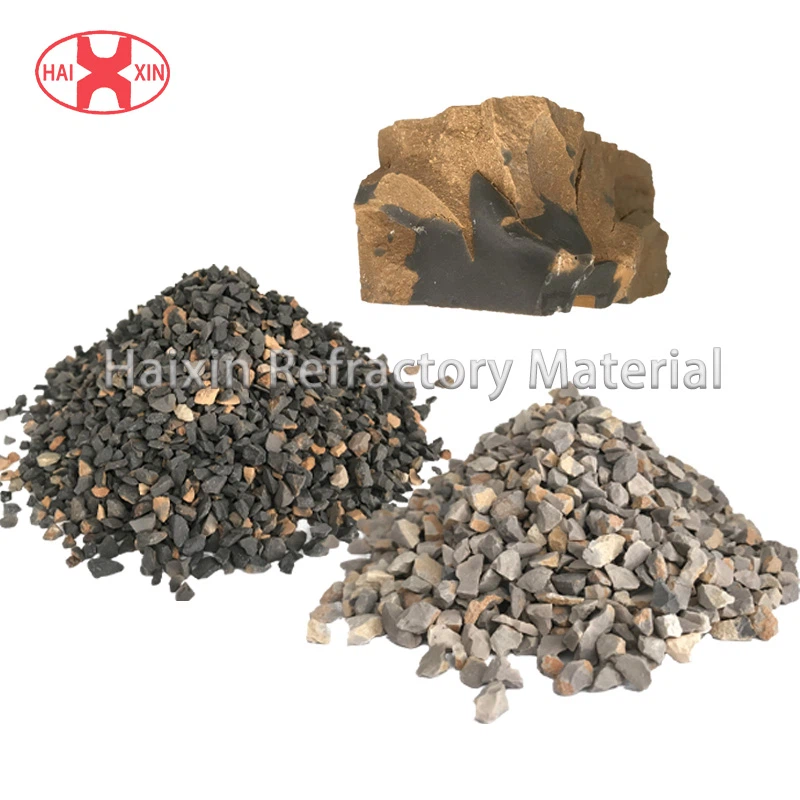
We also have other related refractory raw materials like Chrome Corundum and Jiaobaoshi (hard Clay Clinker) that can be used in combination with Mullite in different applications.
Why Choose Our Mullite Products
As a Mullite supplier, we take pride in our products. We have strict quality control measures in place at every step of the processing. From mining to finishing, we make sure that our products meet the highest standards.
Our team of experts has years of experience in the refractory industry. They know how to handle the processing of Mullite to get the best - quality products. We also offer customized solutions. If you have specific requirements for your Mullite products, we can work with you to meet those needs.
Contact Us for Procurement
If you're in the market for high - quality Mullite products or want to learn more about our processing methods, don't hesitate to reach out. We're always ready to have a chat and discuss your procurement needs. Whether you're a small business or a large industrial company, we can provide you with the right products at a competitive price.
References
- "Refractory Materials Handbook" - A comprehensive guide on the properties and processing of refractory materials.
- "Advanced Ceramics: Processing and Applications" - This book covers the latest techniques in ceramic processing, including those used for Mullite.