

Polycrystalline mullite fiber is a high - performance refractory fiber material widely used in various industrial fields due to its excellent high - temperature resistance, low thermal conductivity, and good chemical stability. As a polycrystalline mullite fiber supplier, I am well - versed in its packaging methods, which play a crucial role in ensuring the quality and integrity of the product during storage and transportation.
1. Understanding the Characteristics of Polycrystalline Mullite Fiber
Before delving into the packaging methods, it is essential to understand the unique properties of polycrystalline mullite fiber. This fiber has a high melting point, typically around 1800°C, and can maintain its structural integrity at high temperatures. It is also lightweight, flexible, and has low thermal mass, making it an ideal choice for thermal insulation applications. However, it is relatively fragile and can be easily damaged by mechanical forces, moisture, and chemical contaminants. Therefore, the packaging must be designed to protect the fiber from these potential hazards.
2. Packaging Materials
2.1 Inner Packaging
- Plastic Film: A common inner packaging material for polycrystalline mullite fiber is plastic film. High - density polyethylene (HDPE) or polypropylene (PP) films are often used because they are moisture - resistant and can prevent the fiber from absorbing water during storage and transportation. The film should be thick enough to provide a good barrier against moisture but also flexible enough to conform to the shape of the fiber product.
- Aluminum Foil: In some cases, aluminum foil is used as an inner packaging layer. Aluminum foil has excellent moisture - proof and anti - oxidation properties. It can also reflect heat, which is beneficial for protecting the fiber from high - temperature environments. The foil is usually laminated with a plastic film to enhance its strength and flexibility.
2.2 Outer Packaging
- Cardboard Boxes: Cardboard boxes are a popular choice for outer packaging. They are lightweight, cost - effective, and easy to handle. The boxes should be made of high - quality corrugated cardboard to provide sufficient strength and protection. The size and design of the boxes should be tailored to the size and quantity of the polycrystalline mullite fiber products.
- Wooden Crates: For larger or heavier polycrystalline mullite fiber products, wooden crates may be used. Wooden crates offer greater strength and durability compared to cardboard boxes. They can withstand more significant mechanical stress during transportation and are suitable for long - distance shipping. However, wooden crates are more expensive and heavier than cardboard boxes.
3. Packaging Forms for Different Polycrystalline Mullite Fiber Products
3.1 Polycrystalline Mullite Wool
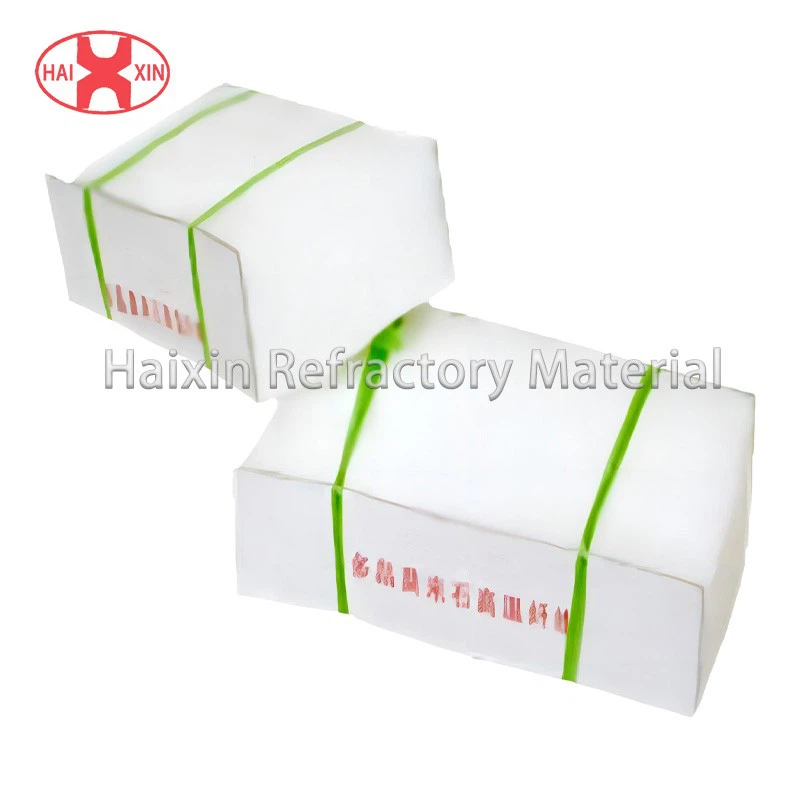
- Baled Packaging: Polycrystalline mullite wool is often baled into compact packages. The wool is first compressed using a baling machine to reduce its volume. Then, it is wrapped with plastic film or burlap and secured with straps. Baled packaging not only saves storage space but also makes it easier to handle and transport the wool.
- Bag Packaging: Smaller quantities of polycrystalline mullite wool can be packaged in plastic bags. The bags are usually sealed to prevent the wool from escaping and to protect it from moisture. The bags can be further placed in cardboard boxes for additional protection.
3.2 Inorganic Ceramic Fiber Board
- Stacked Packaging: Inorganic ceramic fiber boards are typically stacked and packaged together. The boards are first wrapped with plastic film to protect their surfaces. Then, they are placed in a cardboard box or a wooden crate. To prevent the boards from shifting during transportation, dividers or cushioning materials such as foam pads can be used between the boards.
- Custom - Made Packaging: For large - sized or irregular - shaped inorganic ceramic fiber boards, custom - made packaging solutions may be required. This could involve the use of specially designed cardboard boxes or wooden frames to ensure a perfect fit and maximum protection.
3.3 Polycrystalline Mullite Fiber Veneer Block
- Individual Wrapping: Each polycrystalline mullite fiber veneer block is usually wrapped individually with plastic film or aluminum foil. This helps to protect the surface of the block from scratches and damage. The wrapped blocks are then placed in a cardboard box or a wooden crate, with cushioning materials added to prevent them from colliding with each other.
4. Labeling
Proper labeling is an important part of the packaging process. The labels should include the following information:
- Product Name and Specification: Clearly state the name of the polycrystalline mullite fiber product and its technical specifications, such as density, thickness, and thermal conductivity.
- Quantity: Indicate the number of units or the weight of the product in the package.
- Handling Instructions: Provide instructions on how to handle, store, and install the product. This may include information on avoiding excessive bending, compression, or exposure to moisture.
- Safety Warnings: If the product requires special safety precautions, such as wearing protective equipment during handling, these warnings should be clearly marked on the label.
5. Quality Control in Packaging
- Inspection of Packaging Materials: Before using any packaging materials, they should be inspected for quality. The plastic films should be free of holes and tears, and the cardboard boxes should be free of damage.
- Inspection of Packaged Products: After packaging, the products should be inspected to ensure that they are properly packaged. The packages should be sealed tightly, and the labels should be accurately attached. Any damaged or improperly packaged products should be re - packaged or rejected.
6. Environmental Considerations
In today's environmentally conscious world, it is important to consider the environmental impact of the packaging materials. Whenever possible, recyclable or biodegradable packaging materials should be used. For example, cardboard boxes are recyclable, and some plastic films can be made from recycled materials. Additionally, efforts should be made to reduce the amount of packaging waste generated.

7. Conclusion
The packaging method of polycrystalline mullite fiber is a critical aspect of ensuring the quality and integrity of the product. By using appropriate packaging materials, designing suitable packaging forms, and implementing proper labeling and quality control measures, we can protect the fiber from various hazards during storage and transportation. As a polycrystalline mullite fiber supplier, we are committed to providing high - quality products with reliable packaging. If you are interested in purchasing polycrystalline mullite fiber products, please feel free to contact us for more information and to discuss your specific requirements.
References
- ASTM International. (20XX). Standard Specifications for Refractory Fiber Products.
- ISO. (20XX). International Standards for Packaging of Industrial Products.
- Textbooks on Materials Science and Packaging Engineering.