

Hey there! As a ladle castable supplier, I've been in the business for quite a while, and I often get asked about the main components of ladle castable. So, I thought I'd share some insights on this topic.
First off, let's understand what ladle castable is. It's a refractory material used in ladles, which are vessels that hold molten metal. The main job of ladle castable is to protect the ladle from the extreme heat and chemical reactions of the molten metal.
Aggregates
One of the key components of ladle castable is aggregates. Aggregates are basically the big chunks in the mix. They provide the structural strength and help withstand the mechanical stress and thermal shock.
There are different types of aggregates used in ladle castable. For example, alumina aggregates are super popular. Alumina has high refractoriness, which means it can handle really high temperatures without melting or deforming. It also has good chemical stability, so it doesn't react easily with the molten metal or the slag.
Another type of aggregate is magnesia. Magnesia aggregates are great for ladles that deal with basic slag. They can react with the slag to form a protective layer, which helps extend the life of the ladle.
Binders
Binders are another important part of ladle castable. They hold all the aggregates together and give the castable its initial strength before it's heated.
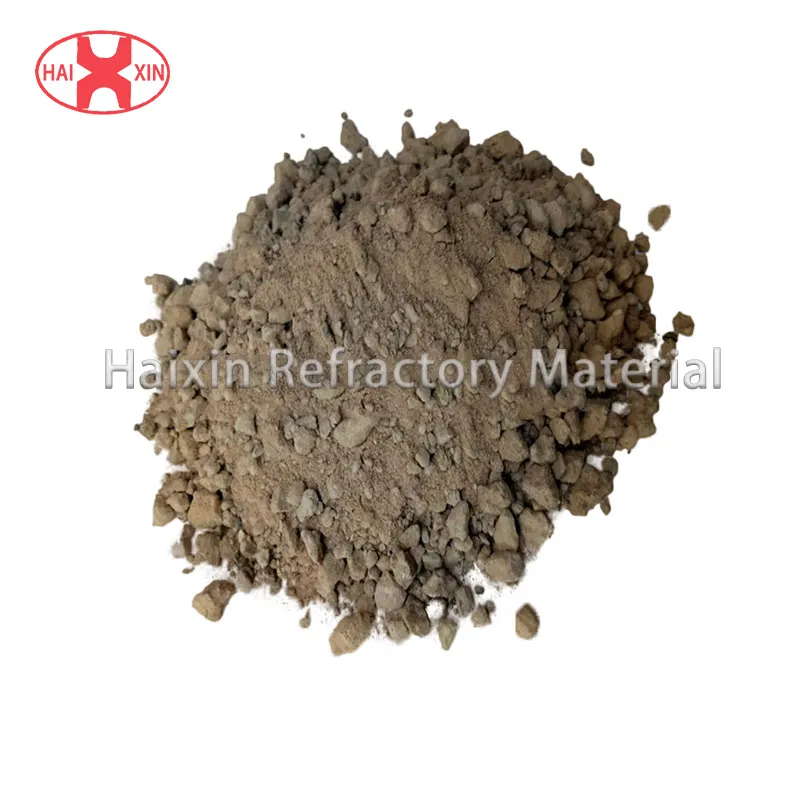

One common binder is calcium aluminate cement. It sets quickly and provides good early strength. When the castable is heated, the cement undergoes a series of chemical reactions that further strengthen the material.
There are also non - cement binders available. For instance, silica sol binders are becoming more and more popular. They offer better high - temperature performance and less shrinkage compared to cement binders. Silica sol binders work by forming a silica gel network that holds the aggregates in place.
Additives
Additives are like the secret sauce in ladle castable. They are added in small amounts to improve specific properties of the castable.
One type of additive is a dispersant. Dispersants help to break up the agglomerates of particles in the castable mix, making it more fluid and easier to pour. This is especially important for castables that need to be pumped into place.
Another useful additive is an antioxidant. Oxidation can cause the castable to deteriorate over time, especially in high - temperature environments. Antioxidants prevent or slow down this oxidation process, thus increasing the durability of the ladle castable.
There are also additives for improving thermal shock resistance. These additives can help the castable expand and contract without cracking when it's exposed to rapid temperature changes.
Specialized Components for Different Applications
Depending on the specific application of the ladle, there may be some specialized components in the castable.
For example, in Electric Furnace Slag Line Gunning Material, which is used to repair the slag line of an electric furnace ladle, additional wear - resistant materials may be added. The slag line is the part of the ladle that is most exposed to the corrosive action of the slag, so the castable needs to be extra tough.
Ladle Working Layer Castable is designed for the inner layer of the ladle that directly contacts the molten metal. It may have a different combination of aggregates and additives to ensure good insulation and resistance to metal penetration.
Electric Furnace Bottom Ramming Material is used to line the bottom of the electric furnace ladle. It needs to have high density and good resistance to mechanical impact, so the components are carefully selected to meet these requirements.
Quality Control in Component Selection
As a ladle castable supplier, I know that quality control in component selection is crucial. We source our aggregates, binders, and additives from reliable suppliers. We test each batch of raw materials to make sure they meet our strict quality standards.
For aggregates, we check the particle size distribution, chemical composition, and refractoriness. For binders, we test the setting time, strength development, and high - temperature performance. And for additives, we ensure that they are effective in improving the desired properties of the castable.
Importance of Customization
Every ladle has different requirements depending on the type of metal it holds, the temperature, and the operating conditions. That's why we offer customized ladle castable solutions.
We work closely with our customers to understand their specific needs. Based on that, we can adjust the composition of the castable, such as changing the ratio of aggregates to binders or adding specific additives. This way, we can provide a ladle castable that offers the best performance for their particular application.
Conclusion
In conclusion, the main components of ladle castable include aggregates, binders, and additives. Each component plays a vital role in determining the properties and performance of the castable. Aggregates provide strength, binders hold the material together, and additives enhance specific properties.
If you're in the market for ladle castable, whether it's for a new ladle or for repair work, we'd love to help. We have a wide range of products, including Electric Furnace Slag Line Gunning Material, Ladle Working Layer Castable, and Electric Furnace Bottom Ramming Material. Contact us to discuss your requirements and let's find the perfect ladle castable solution for you.
References
- "Refractories Handbook" by John Smith
- "Advanced Refractory Materials" published by the Institute of Refractory Technology
- Industry research reports on ladle castable materials.