

How is Mullite formed?
Hey there! I'm a supplier of all sorts of refractory raw materials, and today I wanna talk about one of my favorites - mullite. You might be wondering, "How is mullite formed?" Well, stick around, and I'll break it down for you.
First off, let's understand what mullite is. Mullite is a really cool ceramic material that's super useful in a bunch of industries. It's got high refractoriness, good thermal stability, and excellent mechanical properties. That's why it's widely used in things like Precision Foundry Sand, Foundry Sand, and Foundry Flour.
Now, onto the formation of mullite. There are a few different ways mullite can be made, but I'll focus on the two main ones: natural formation and synthetic formation.
Natural Formation
In nature, mullite is formed through a long - term geological process. It usually starts with aluminosilicate minerals. These minerals are quite common in the Earth's crust. Over time, under the influence of high temperatures and pressures deep within the Earth, chemical reactions take place.
The starting materials for natural mullite formation are often clay minerals like kaolinite. Kaolinite has a chemical formula of Al₂Si₂O₅(OH)₄. When kaolinite is heated to high temperatures, it undergoes a series of complex reactions.
First, at around 450 - 600°C, kaolinite loses its hydroxyl groups. This is called dehydroxylation. The reaction can be written as:
Al₂Si₂O₅(OH)₄ → Al₂Si₂O₇ + 2H₂O
As the temperature rises further, around 925 - 950°C, the metakaolin (Al₂Si₂O₇) starts to break down. Some of the silica and alumina in it start to rearrange. And then, at temperatures above 1000°C, mullite begins to form. The reaction is something like:
3Al₂Si₂O₇ → 3Al₂O₃·2SiO₂ + 4SiO₂
The newly formed mullite crystals grow slowly over time. This natural process can take thousands or even millions of years. Natural mullite deposits are relatively rare, and the quality can vary a lot depending on the geological conditions where they were formed.
Synthetic Formation
Synthetic mullite is made in a more controlled environment, usually in a factory. There are several methods for synthetic mullite production, but I'll talk about the two most common ones: sintering and fusion.
Sintering
Sintering is a widely used method for making synthetic mullite. In this process, we start with raw materials that contain alumina (Al₂O₃) and silica (SiO₂). These raw materials can be things like bauxite (which is rich in alumina) and kaolin (which contains both alumina and silica).
First, the raw materials are crushed and ground into fine powders. This increases the surface area of the particles, which helps in the chemical reactions later on. Then, the powders are mixed together in the right proportions to get the desired alumina - silica ratio for mullite.
The mixed powders are then formed into a compact shape, like a brick or a pellet. This can be done by pressing the powder under high pressure. After that, the compact is heated in a furnace. The heating process is carefully controlled.
At first, the temperature is gradually increased to remove any moisture and volatile impurities in the raw materials. Then, as the temperature reaches around 1300 - 1600°C, the alumina and silica react to form mullite. The reaction is similar to the one in natural formation:
3Al₂O₃ + 2SiO₂ → 3Al₂O₃·2SiO₂
During sintering, the particles start to bond together. The pores between the particles gradually decrease in size, and the material becomes denser. The final product is a solid block of synthetic mullite with good mechanical and thermal properties.
Fusion
Fusion is another way to make synthetic mullite. In this method, the raw materials are melted at extremely high temperatures, usually above 1800°C. The melting is done in an electric arc furnace or a similar high - temperature melting device.
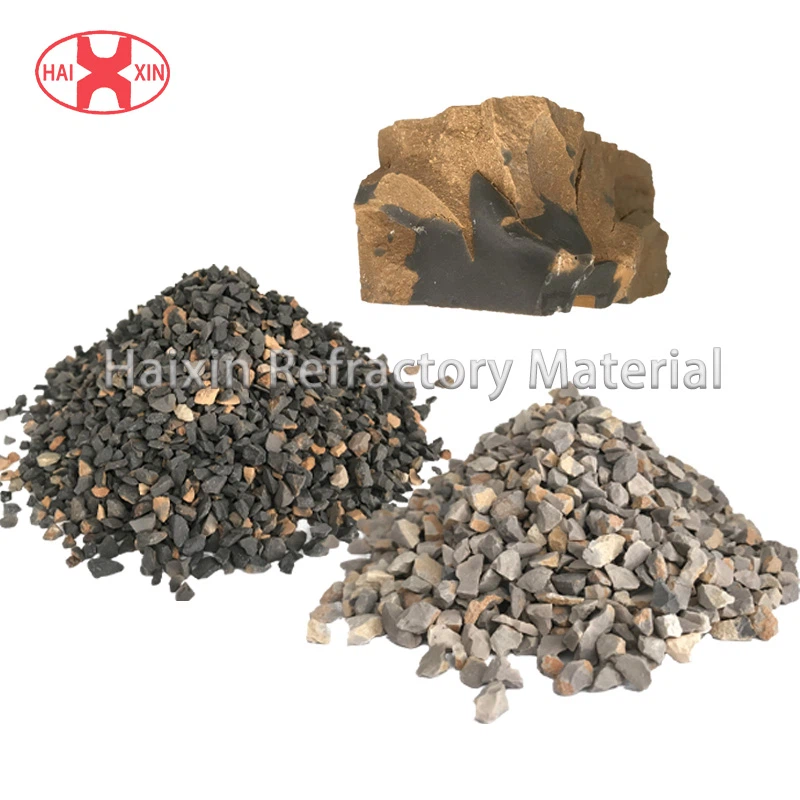

The starting materials are also aluminosilicate compounds. Once the materials are completely melted, they are allowed to cool slowly. As they cool, mullite crystals start to form. The advantage of the fusion method is that it can produce mullite with very high purity and excellent crystalline structure.
The cooling rate is crucial in the fusion process. If the cooling is too fast, the mullite crystals may not have enough time to grow properly, and the final product may have some internal stresses. On the other hand, if the cooling is too slow, it can be time - consuming and energy - intensive.
Why Synthetic Mullite is Popular
While natural mullite has its charm, synthetic mullite has become more popular in industrial applications. There are a few reasons for this.
Firstly, synthetic mullite can be produced with a more consistent quality. The composition and properties of synthetic mullite can be precisely controlled during the manufacturing process. This is very important in industries where high - performance materials are required.
Secondly, the supply of natural mullite is limited. Mining natural mullite can also be expensive and environmentally damaging. Synthetic mullite production can be adjusted according to market demand, and it has a relatively lower environmental impact compared to large - scale mining.
Applications of Mullite
Mullite is used in a wide range of industries. As I mentioned earlier, it's a key component in Precision Foundry Sand, Foundry Sand, and Foundry Flour. In the foundry industry, mullite's high refractoriness and thermal stability make it ideal for making molds and cores.
It's also used in the production of refractory bricks. These bricks are used in furnaces, kilns, and other high - temperature industrial equipment. Mullite - based refractory bricks can withstand very high temperatures without melting or deforming easily.
Another important application is in the electronics industry. Mullite has good electrical insulation properties and low thermal expansion. This makes it suitable for use in substrates for electronic components.
Other Related Refractory Materials
Mullite is not the only important refractory material. There are others like Chrome Corundum. Chrome corundum is a combination of chromium oxide and corundum (alumina). It has excellent corrosion resistance and high - temperature strength. In some applications, it can be used together with mullite to enhance the performance of refractory products.
If you're interested in Mullite or other refractory raw materials, whether it's for your foundry business, electronics project, or any other industrial application, I'd love to talk to you. We can discuss your specific needs and find the best solutions for you.
Conclusion
So, that's how mullite is formed. Whether it's through the slow natural process or the more controlled synthetic methods, mullite is an amazing material with a wide range of applications. If you have any questions about mullite or other refractory materials, feel free to reach out. I'm here to help you find the right products for your business.
References
- Kingery, W. D., Bowen, H. K., & Uhlmann, D. R. (1976). Introduction to Ceramics. John Wiley & Sons.
- Schneider, H., X. Ma, and P. E. M. Hodgson. (2008). High - Temperature Properties of Refractories. Wiley - VCH.