

Hey there! I'm a supplier of refractory raw materials, and today I'm gonna talk about the refractory raw materials used in the silicon carbide industry. Silicon carbide is a super important material in various industries, like metallurgy, ceramics, and electronics. And the right refractory raw materials play a crucial role in its production and application.
First off, let's talk about mullite. Mullite is a top - notch refractory raw material. It has excellent thermal stability, high strength, and good chemical resistance. In the silicon carbide industry, mullite can be used in the lining of furnaces where silicon carbide is produced. The high temperatures in these furnaces can reach up to 2000°C or even higher, and mullite can withstand such extreme heat without significant deformation or chemical reactions. You can find more about Mullite on our website.
Another great option is the Synthetic M47 Mullite (Synthetic Dense Alumina Silicate Aggregate). This synthetic material is engineered to have even better properties than natural mullite in some aspects. It has a more uniform composition, which means more consistent performance. In the silicon carbide production process, synthetic M47 mullite can be used in the construction of kiln furniture. Kiln furniture is used to support the silicon carbide products during firing, and it needs to be able to handle the weight of the products and the high - temperature environment without breaking down.
Precision Foundry Sand, Foundry Sand, and Foundry Flour are also widely used in the silicon carbide industry. These materials are often used in the casting and molding processes of silicon carbide products. The Precision Foundry Sand, Foundry Sand, Foundry Flour have high refractoriness, which is essential for creating high - quality silicon carbide castings. They can also provide good moldability, allowing for the production of complex - shaped silicon carbide parts.
Let's dig a bit deeper into the properties that make these refractory raw materials so suitable for the silicon carbide industry. Thermal shock resistance is a big deal. When the temperature in a silicon carbide furnace changes rapidly, the refractory materials need to be able to handle the stress without cracking. Mullite and its synthetic counterparts have relatively low coefficients of thermal expansion, which means they expand and contract less with temperature changes, reducing the risk of thermal shock damage.
Chemical resistance is another key factor. In the silicon carbide production process, there are often various chemical reactions going on. The refractory materials need to be resistant to the corrosive effects of chemicals such as acids, alkalis, and molten metals. Mullite and synthetic M47 mullite have good chemical inertness, which helps them maintain their integrity in these harsh chemical environments.
Strength is also important. The refractory materials need to be strong enough to support the weight of the silicon carbide products and the equipment in the furnace. Whether it's the lining of the furnace or the kiln furniture, they need to be able to withstand mechanical stress without breaking or deforming.
Now, let's talk about how these refractory raw materials are processed. For natural mullite, it usually goes through a series of steps including mining, crushing, and purification. The mined mullite ore is first crushed into smaller pieces, and then it is purified to remove impurities. Synthetic M47 mullite, on the other hand, is produced through a chemical synthesis process. Precise amounts of raw materials are mixed and heated under controlled conditions to form the desired synthetic material.
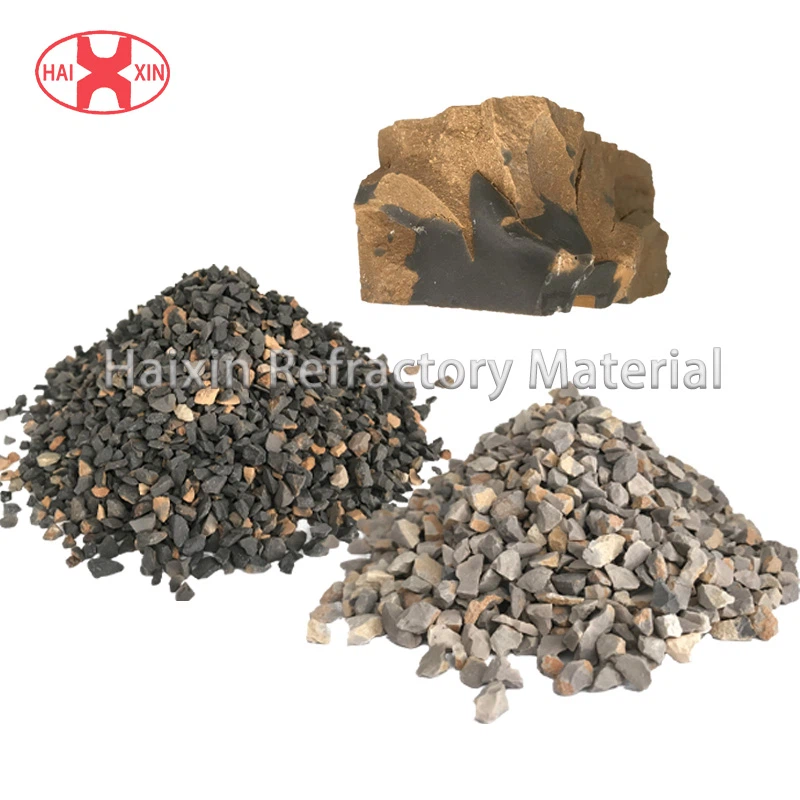

The foundry sands and flours are also processed carefully. They are usually washed and screened to ensure a consistent particle size and quality. This is important because the particle size of the foundry sand can affect the surface finish and dimensional accuracy of the silicon carbide castings.
When it comes to using these refractory raw materials in the silicon carbide industry, there are some best practices. It's important to choose the right material for the specific application. For example, if you need a material for a high - temperature, high - stress area in the furnace, synthetic M47 mullite might be a better choice than natural mullite. You also need to make sure that the installation and maintenance of the refractory materials are done correctly. Proper installation can ensure good thermal insulation and mechanical stability, while regular maintenance can extend the lifespan of the materials.
In conclusion, the refractory raw materials like mullite, synthetic M47 mullite, and precision foundry sand play a vital role in the silicon carbide industry. They provide the necessary thermal stability, chemical resistance, and strength for the production and application of silicon carbide products. If you're in the silicon carbide industry and looking for high - quality refractory raw materials, we're here to help. We've got a wide range of products to meet your specific needs. Feel free to reach out to us for more information and to start a procurement discussion. We're confident that our products can enhance the efficiency and quality of your silicon carbide production process.
References
- General knowledge about refractory materials in the silicon carbide industry
- Technical data sheets of mullite, synthetic M47 mullite, and foundry sands