

In the canned food industry, the selection of appropriate refractory raw materials is crucial for ensuring the efficiency and quality of the production process. As a refractory raw materials supplier, I've witnessed firsthand how these materials play a significant role in the industry. This blog will delve into the various refractory raw materials used in the canned food industry, exploring their properties, applications, and benefits.
1. The Significance of Refractory Raw Materials in the Canned Food Industry
The canned food industry involves several high - temperature processes such as can manufacturing, food sterilization, and heat treatment. Refractory raw materials are essential in these processes as they can withstand high temperatures without deforming or losing their structural integrity. They are used in furnaces, kilns, and other heating equipment, protecting the equipment from the harsh effects of high - temperature environments and ensuring a stable and efficient production process.
2. Common Refractory Raw Materials and Their Applications
2.1 Mullite
Mullite is a widely used refractory raw material in the canned food industry. Mullite is a mineral with excellent high - temperature resistance, good thermal shock resistance, and low thermal expansion coefficient. These properties make it ideal for use in the lining of furnaces and kilns used in can manufacturing.
In can manufacturing, the cans are often formed and shaped at high temperatures. Mullite lining in the furnaces can ensure that the temperature is evenly distributed, preventing uneven heating of the cans and reducing the occurrence of defects. Moreover, its high thermal shock resistance allows it to withstand rapid temperature changes during the heating and cooling cycles of the furnaces, prolonging the service life of the furnace lining.
2.2 Synthetic M47 Mullite (Synthetic Dense Alumina Silicate Aggregate)
Synthetic M47 Mullite (Synthetic Dense Alumina Silicate Aggregate) is another important refractory raw material. It is a synthetic material with a high alumina content, which gives it enhanced high - temperature strength and chemical stability.
In the canned food industry, it can be used in the construction of high - temperature reactors for food sterilization. The high - temperature strength of synthetic M47 mullite ensures that the reactor can maintain its shape and structure under high - pressure and high - temperature conditions during the sterilization process. Its chemical stability also makes it resistant to the corrosion of various chemicals and food ingredients, ensuring the safety and quality of the canned food.
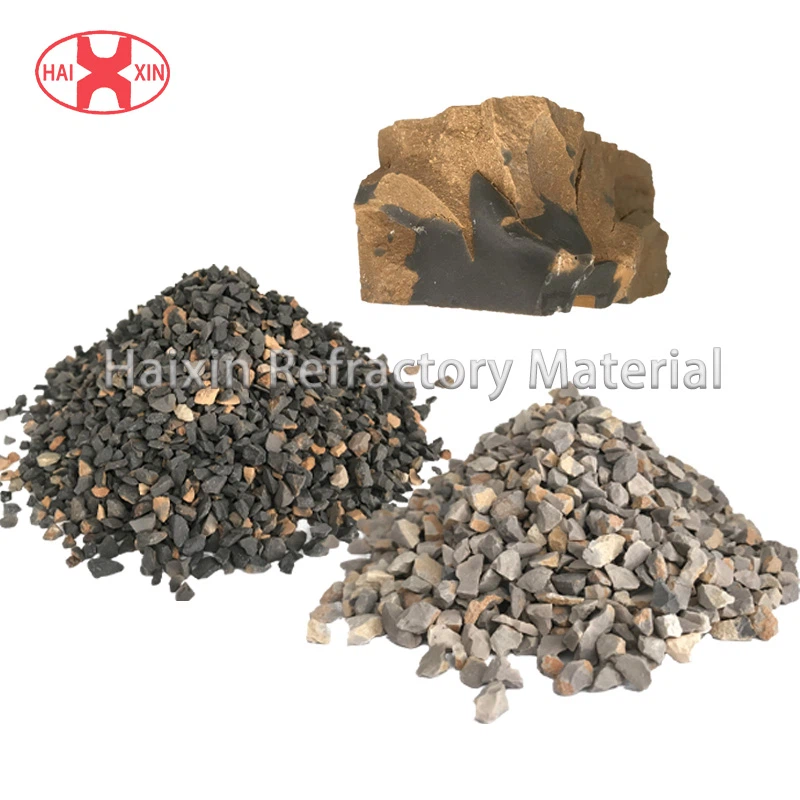

2.3 Precision Foundry Sand, Foundry Sand, and Foundry Flour
Precision Foundry Sand, Foundry Sand, and Foundry Flour are commonly used in the casting process of can - making molds. These materials have high refractoriness, good fluidity, and excellent moldability.
During the casting of can - making molds, the foundry sand and flour are used to create the mold cavity. Their high refractoriness allows them to withstand the high - temperature molten metal used in the casting process without melting or deforming. The good fluidity ensures that the molten metal can fill the mold cavity evenly, resulting in high - quality molds with precise dimensions. The excellent moldability also makes it easy to create complex mold shapes, meeting the diverse design requirements of canned food packaging.
3. Benefits of Using High - Quality Refractory Raw Materials
3.1 Improved Production Efficiency
High - quality refractory raw materials can provide better insulation and heat transfer performance in high - temperature equipment. For example, mullite lining in furnaces can reduce heat loss, allowing the furnaces to reach the desired temperature more quickly and maintain a stable temperature. This can significantly shorten the production cycle and increase the production capacity of the canned food industry.
3.2 Enhanced Product Quality
The use of refractory raw materials with excellent properties can ensure more uniform heating and cooling in the production process. In can manufacturing, this means fewer defects in the cans, such as cracks and uneven thickness. In food sterilization, high - quality refractory materials in the reactors can ensure that the food is evenly heated, killing all harmful microorganisms and extending the shelf life of the canned food.
3.3 Cost Savings
Although high - quality refractory raw materials may have a higher initial cost, their long service life and excellent performance can lead to significant cost savings in the long run. For instance, synthetic M47 mullite in high - temperature reactors has high wear resistance and chemical stability, reducing the frequency of equipment maintenance and replacement. This can save on both material and labor costs for the canned food manufacturers.
4. Considerations When Selecting Refractory Raw Materials
4.1 Temperature Requirements
Different processes in the canned food industry have different temperature requirements. For example, can manufacturing furnaces may operate at temperatures around 1000 - 1500°C, while food sterilization reactors may have lower but still significant temperature requirements. It is essential to select refractory raw materials that can withstand the specific temperature range of the application.
4.2 Chemical Compatibility
The refractory raw materials should be chemically compatible with the substances they come into contact with. In the canned food industry, this includes molten metals in can manufacturing and various food ingredients and chemicals in food processing. Materials that are resistant to corrosion and chemical reactions are preferred to ensure the safety and quality of the canned food.
4.3 Physical Properties
Physical properties such as thermal shock resistance, mechanical strength, and porosity also need to be considered. High thermal shock resistance is necessary for equipment that undergoes rapid temperature changes, while high mechanical strength is required for structures that bear heavy loads. Low porosity can prevent the penetration of molten metals and chemicals, improving the durability of the refractory materials.
5. Conclusion
Refractory raw materials are indispensable in the canned food industry. Mullite, synthetic M47 mullite, precision foundry sand, foundry sand, and foundry flour each play unique and important roles in different processes of the industry. By using high - quality refractory raw materials, the canned food industry can achieve improved production efficiency, enhanced product quality, and cost savings.
If you are in the canned food industry and are looking for reliable refractory raw materials, I invite you to contact us for procurement and negotiation. We are committed to providing you with the highest - quality refractory products and excellent service to meet your specific needs.
References
- Smith, J. (2018). Refractory Materials in the Food Processing Industry. Journal of Food Engineering, 120, 56 - 63.
- Johnson, A. (2019). High - Temperature Refractory Applications in Can Manufacturing. International Journal of Manufacturing Technology, 45(3), 289 - 301.
- Brown, K. (2020). Selection and Use of Foundry Sands in the Packaging Industry. Packaging Science Review, 32(2), 78 - 85.