

As a bauxite supplier, I've witnessed firsthand the significance of bauxite in the aluminum production industry. Bauxite has long been the primary source of aluminum, but with growing concerns over environmental impact, resource depletion, and geopolitical issues, exploring alternatives to bauxite has become a pressing need. In this blog, I'll delve into some of the promising alternatives to bauxite for aluminum production and discuss their potential in reshaping the future of the industry.
The Dominance of Bauxite in Aluminum Production
Bauxite is the most common ore used in aluminum production, accounting for approximately 95% of the world's aluminum production. It is a sedimentary rock rich in aluminum hydroxides, which are extracted through a process called the Bayer process. The Bayer process involves crushing and grinding bauxite, followed by digestion in a sodium hydroxide solution at high temperatures and pressures. This results in the formation of sodium aluminate, which is then precipitated to obtain alumina (aluminum oxide). The alumina is further processed through the Hall - Héroult process, an electrolytic reduction method, to produce pure aluminum.
However, there are several challenges associated with bauxite mining and processing. Bauxite mining can lead to significant environmental degradation, including deforestation, soil erosion, and water pollution. Additionally, the energy consumption in the refining and smelting processes is extremely high, contributing to greenhouse gas emissions. Moreover, the distribution of bauxite reserves is uneven around the world, with a few countries holding the majority of the resources, which can lead to supply - chain disruptions due to geopolitical tensions.
Alternatives to Bauxite
Clay Minerals
Clay minerals are a group of hydrous aluminum phyllosilicates that can serve as an alternative source of aluminum. Kaolinite, a common clay mineral, contains aluminum in the form of alumina. One of the advantages of using clay minerals is their wide distribution and abundance. They can be found in large quantities in many countries, reducing the dependence on a few bauxite - rich regions.
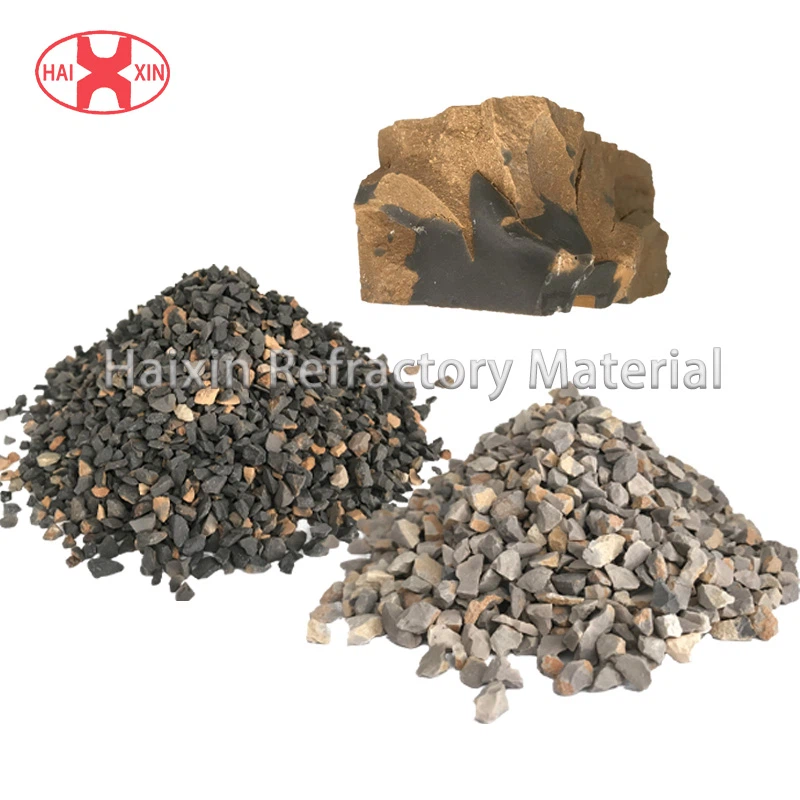

To extract aluminum from clay minerals, several methods have been developed. One approach is acid leaching, where the clay is treated with strong acids such as sulfuric or hydrochloric acid to dissolve the aluminum. The resulting solution is then purified and the aluminum is recovered. However, acid leaching processes can generate large amounts of acidic waste, which needs to be properly managed to avoid environmental harm. Another method is pyrometallurgical treatment, which involves heating the clay minerals at high temperatures to break down the structure and release the aluminum. This process requires significant energy input but can potentially reduce the waste production compared to acid leaching.
Anorthosite
Anorthosite is a coarse - grained igneous rock composed primarily of plagioclase feldspar, which is a source of aluminum. It is found in various parts of the world, including Canada, the United States, and Scandinavia. Anorthosite contains a relatively high percentage of alumina, typically in the range of 20 - 40%.
The extraction of aluminum from anorthosite involves complex processes. First, the anorthosite is crushed and ground into a fine powder. Then, it undergoes a series of chemical treatments to separate the aluminum from other elements. One of the major challenges in using anorthosite for aluminum production is the presence of other elements such as calcium and sodium, which can interfere with the extraction process. However, with the development of advanced separation technologies, these challenges are gradually being overcome.
Mullite
Mullite is a mineral that contains aluminum silicate and can be used as an alternative raw material for aluminum production. It has excellent high - temperature properties and is often used in refractory applications. Mullite can be synthesized from various starting materials, including clay minerals and alumina - rich waste materials.
The production of aluminum from mullite involves breaking down the mullite structure to release the aluminum. This can be achieved through chemical processes such as melting and reduction. One of the benefits of using mullite is its relative stability and the potential for recycling. Additionally, using mullite can help reduce the environmental impact associated with traditional bauxite - based production methods.
Precision Foundry Sand, Foundry Sand, Foundry Flour
These materials, which are typically composed of silica with varying degrees of purity and particle size, may also be used in certain aluminum production processes. Sometimes, they can be used as an additive or a component in the flux materials used in aluminum smelting. They can help modify the properties of the molten aluminum, improve the quality of the final product, and reduce the energy required in the smelting process. In addition, they can potentially be used in the production of aluminum alloys, where their presence can enhance the mechanical and thermal properties of the alloys.
Synthetic M47 Mullite (Synthetic Dense Alumina Silicate Aggregate)
Synthetic M47 Mullite is an engineered material that contains a high proportion of aluminum. Its synthetic nature allows for better control of its composition and properties compared to natural minerals. In aluminum production, it can be used as a raw material or an additive. The synthetic nature also means that it can be produced in a more controlled environment, potentially reducing the environmental impact associated with mining natural ores.
Advantages and Disadvantages of Alternatives
The main advantage of these alternative materials is their potential to diversify the aluminum supply chain. By reducing the reliance on bauxite, the industry can become more resilient to supply disruptions caused by geopolitical issues or environmental disasters affecting bauxite mines. They also tend to have a more even global distribution, which can open up opportunities for local production in regions without significant bauxite deposits.
On the other hand, these alternatives also face several challenges. Many of the extraction processes from non - bauxite sources are still in the research and development stage. They often require complex and energy - intensive methods to extract aluminum, which may not be as cost - effective as the established bauxite - based processes. Additionally, the scale - up of these alternative production methods can be technologically challenging, requiring significant investment in infrastructure and equipment.
The Future Outlook
In the future, as the demand for aluminum continues to grow, while environmental and geopolitical considerations become more prominent, the exploration and development of bauxite alternatives are likely to accelerate. Research efforts are focused on improving the extraction processes of these alternative materials, increasing their energy efficiency, and reducing their environmental impact.
As a bauxite supplier, I understand the importance of adapting to these changes in the industry. While bauxite will likely remain a major source of aluminum for the foreseeable future, exploring and promoting the use of alternatives can create a more sustainable and stable aluminum production ecosystem.
Conclusion
The search for alternatives to bauxite for aluminum production is a necessary step towards a more sustainable and resilient aluminum industry. While bauxite has been the cornerstone of aluminum production for decades, the challenges associated with its mining and processing cannot be ignored. Clay minerals, anorthosite, Mullite, Precision Foundry Sand, Foundry Sand, Foundry Flour, and Synthetic M47 Mullite (Synthetic Dense Alumina Silicate Aggregate) offer promising alternatives, although they come with their own set of challenges.
We at [our position as a supplier] are committed to being at the forefront of this industry transformation. Whether you are currently using bauxite or are interested in exploring these alternative materials, we can provide valuable insights and support. If you are looking to source high - quality bauxite or engage in discussions about the potential use of alternative materials in aluminum production, we invite you to contact us. Our team of experts is ready to assist you in understanding the various options available and finding the best solutions for your specific needs. Let's work together to build a more sustainable future for the aluminum industry.
References
- McLellan, R. B. (2012). Primary Aluminum Production and the Environment: Challenges and Opportunities. Journal of Minerals and Materials Characterization and Engineering, 11(1), 47 - 58.
- Eisele, T. C., & Bradley, D. J. (2003). Aluminum Recovery from Non - Bauxite Resources. Minerals Engineering, 16(8 - 10), 645 - 651.
- Das, S. K., & Natarajan, K. A. (2018). Extraction of Aluminum from Anorthosite: A Review. International Journal of Mineral Processing, 176, 1 - 15.